
New research and innovative cancer treatments | New hope for patients
Cancer is one of the most important medical challenges of the century. Millions of people worldwide are diagnosed with the disease every year, which has led to extensive research into new cancer treatments. Advances in medical science, biotechnology, and nanotechnology have led to more precise, less invasive, and more effective treatments. In this article, we will review the latest research and new cancer treatments and see how modern science has brought new hope to patients and their families.
The Hamdali Foundation is a support group in the field of helping cancer patients, which aims to reduce treatment concerns, cover essential expenses, and boost patients’ morale. The foundation, with public donations and the participation of donors, tries to make the treatment path smoother for patients and their families. If you are interested in supporting them, you can do so through online payment, telephone contact, or online chat. Also, people who need help or advice can simply contact the foundation’s support team through these communication channels to receive the necessary guidance.
- New Cancer Research
- New cancer treatment methods
- Clinical research and future hopes
- Advantages of modern treatment methods over old methods
- Challenges and limitations
- The Role of Charities and Public Support
- Misconceptions about new cancer treatments
- Global Research and the Role of Artificial Intelligence in Cancer Treatment
- Cancer Treatment Using CRISPR
- Microbiome Therapy
- RNA-Based Therapies and Personalized Vaccines
- Lifestyle Influences New Treatments
- The Future of Cancer Treatment: Precision Medicine
- New non-invasive methods
- Hybrid Research: Cancer and AI in Pharma
- The importance of psychological and social support alongside modern treatments
- Conclusion
- Frequently Asked Questions
New Cancer Research
Medical research has been moving in recent years toward targeted, personalized treatments. Instead of traditional methods like chemotherapy, which affect the entire body, scientists are trying to design drugs and methods that target only cancer cells. Some of the most important areas of research include:
- Gene Therapy: The use of genetic modification techniques to correct defective genes or to silence genes that stimulate tumor growth.Immunotherapy: The use of the body’s immune system to recognize and destroy cancer cells.Targeted Therapy: Drugs that affect specific cell growth pathways and kill only cancer cells.
Nanotechnology in cancer treatment: The use of nanoparticles to deliver drugs to tumor tissues with minimal damage to healthy cells.
Cancer vaccines: Vaccines designed to prevent or treat certain cancers, such as cervical cancer (HPV) or liver cancer (HBV).
New cancer treatment methods
1. Immunotherapy
One of the biggest advances of the last decade is immunotherapy. This method identifies and destroys cancer cells by boosting or reprogramming the body’s immune system. Types of immunotherapy include:
Checkpoint inhibitors, which release the brakes on the immune system.
CAR-T cells, which genetically engineer the body’s T cells to fight cancer directly.
Therapeutic vaccines to stimulate specific immunity against tumors.
2. Targeted therapy
In this method, drugs affect specific molecular pathways that control cancer growth. For example, drugs that inhibit the HER2 protein in breast cancer or EGFR in lung cancer. This method has far fewer side effects than traditional chemotherapy.
3. Gene Therapy
Gene therapy is one of the most promising areas of research. This method attempts to correct or silence mutated genes that cause cancer. Although it is still in the experimental stages, it has a bright future for many treatment-resistant cancers.
4. Nanotechnology in Cancer Treatment
The use of nanoparticles allows drugs to be delivered precisely to the tumor site. This not only increases the effectiveness of the treatment, but also reduces its side effects. For example, lipid nanoparticles play an important role in the delivery of anti-cancer drugs and even mRNA.
5. Advanced Radiotherapy and Robotic Surgery
Advanced radiotherapy such as proton therapy has been able to reduce the harmful effects on healthy tissues around the tumor. Robotic surgeries have also made it possible to remove tumors more precisely with minimal damage to the patient’s body.
6. Combination Therapy
Combining several methods such as chemotherapy, immunotherapy and targeted therapy has yielded much better results than using a single method. These methods can reduce the resistance of tumors.
Clinical research and future hopes
A large portion of new cancer treatments are still in the clinical trial phase. For example:
Using artificial intelligence to predict cancer growth and choose the best treatment.
Developing new drugs that are tailored to a person’s genetic profile.
Research on the gut microbiome and its role in response to cancer treatments.
Advantages of modern treatment methods over old methods
Less side effects compared to chemotherapy.
More targeted and effective on cancer cells.
Increased life expectancy of patients.
Possibility of personalized treatment based on each individual’s genetics.
Challenges and limitations
Despite many advances, these methods still face challenges:
High costs and lack of access to all patients.
Long clinical trial phases.
Possibility of drug resistance.
Need for advanced infrastructure in medical centers.
The Role of Charities and Public Support
In many countries, charities and non-governmental organizations play an important role in providing financial and psychological support to patients. In Iran, foundations such as the Empathy Foundation, with public support, provide patients with access to the latest treatments.
Misconceptions about new cancer treatments
Immunotherapy cures all cancers: While it is still not effective for some cancers.
Targeted drugs are without any side effects: Although side effects are less, they still exist.
Other traditional methods are useless: In fact, new treatments are usually used in conjunction with old methods.
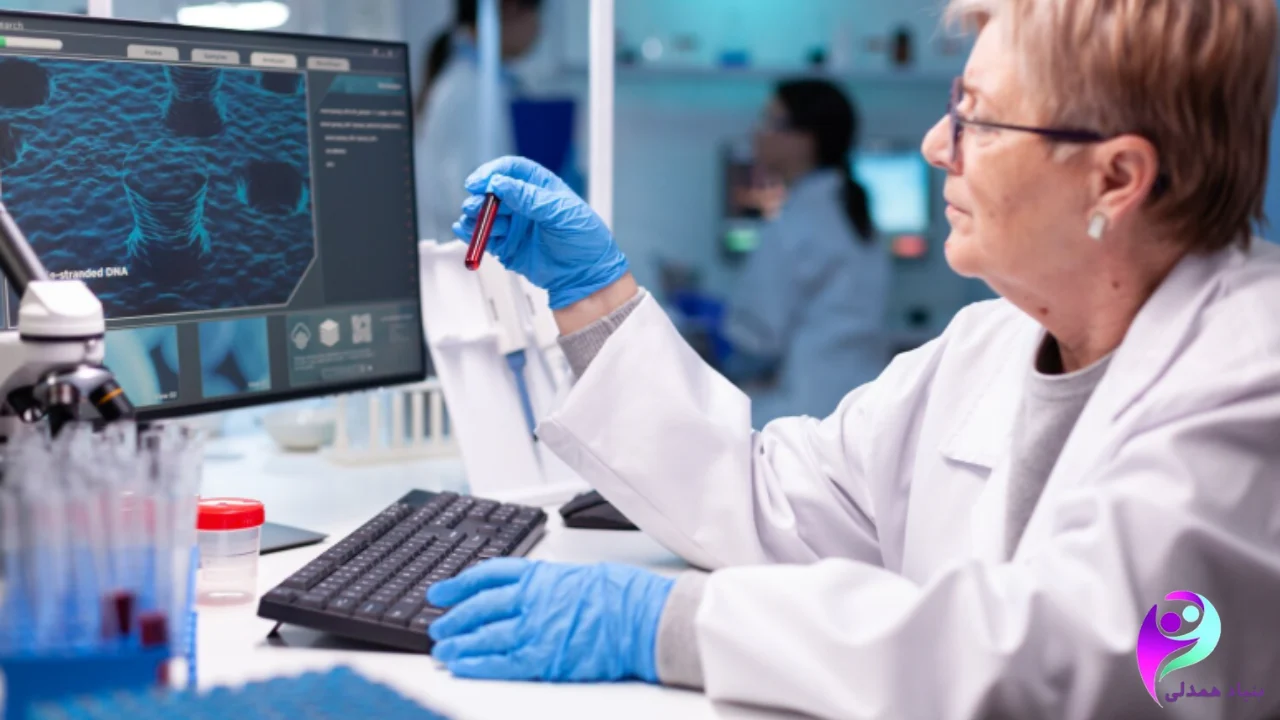
Global Research and the Role of Artificial Intelligence in Cancer Treatment
One of the most exciting developments in the field of cancer research is the use of artificial intelligence (AI) and machine learning. Today, artificial intelligence algorithms are able to analyze medical images such as CT scans and MRIs with greater accuracy than the human eye and identify even the smallest signs of cancer.
The advantages of these methods:
Early diagnosis of cancer in the early stages.
Helping to choose the best drug and treatment method based on data patterns.
Reducing the possibility of human errors in diagnosis.
Some of the world’s largest pharmaceutical companies are also using AI to design new drugs. This means that a process that previously took years can now be completed in a few short months.
Cancer Treatment Using CRISPR
One of the great revolutions in the field of biotechnology is the genome editing tool CRISPR-Cas9. This technology allows scientists to edit or delete mutated genes that cause cancer. In some experiments, CRISPR has been used to modify the body’s immune cells to make them more powerful in fighting cancer.
Potential applications of CRISPR in cancer treatment:
Correcting damaged genes.
Increasing the sensitivity of tumors to drugs.
Preventing the uncontrolled proliferation of cancer cells.
Although this method is still in the early clinical stages, it paints a revolutionary future for cancer treatment.
Microbiome Therapy
New research has shown that beneficial gut bacteria play an important role in the body’s response to cancer treatments, especially immunotherapy.
Some patients with a specific mix of gut bacteria respond better to treatment.
Changing their diet or taking probiotics can help improve the effectiveness of anti-cancer drugs.
This discovery shows that cancer treatment is not just limited to drugs and genes, but also the body and its microorganisms play a big role.
RNA-Based Therapies and Personalized Vaccines
After the success of mRNA vaccines during the coronavirus pandemic, scientists are turning to the same technology for cancer.
Personalized vaccines are created based on the genetic profile of a patient’s tumor.
These vaccines train the immune system to better recognize cancer cells.
Early results show that this approach can reduce cancer recurrence.
Lifestyle Influences New Treatments
Even with the most advanced treatments, the role of a healthy lifestyle is undeniable. Research has shown that cancer patients who have a healthy diet, regular physical activity, and psychological support respond better to new treatments.
Key factors:
A diet rich in antioxidants (vegetables, fruits, whole grains).
Regular light exercise to improve immunity and reduce fatigue.
Reducing stress and anxiety through meditation and psychological support.
This is especially important in immunotherapy, because a stronger immune system responds better to treatment.
The Future of Cancer Treatment: Precision Medicine
Precision Medicine means designing a unique treatment for each patient.
Instead of generic prescriptions that fit everyone, treatment is tailored based on an individual’s DNA, tumor type, age, and lifestyle.
The use of biomarkers allows doctors to know which drugs work best for which patients.
This is moving toward personalized treatment that greatly increases the likelihood of success and reduces complications.
New non-invasive methods
In addition to classic treatments, new non-invasive methods have been developed:
HIFU: Use of high-intensity focused ultrasound waves to destroy tumor cells.
Thermotherapy: Heating cancer cells to destroy them.
Irreversible electroporation (IRE): Destroying tumors with short, intense electrical waves.
These methods cause less damage to the body and reduce the patient’s recovery time.
Hybrid Research: Cancer and AI in Pharma
Scientists are using deep learning models to simulate the molecular pathways of cancer. This will help design more precise drugs and predict drug resistance. For example:
Predicting which patients will respond to immunotherapy.
Finding new drug compounds at high speed.
This collaboration between technology and medicine will revolutionize the future of cancer treatment.
The importance of psychological and social support alongside modern treatments
Research shows that cancer patients who have psychological, family and social support receive better results from modern treatments.
Psychological counseling helps reduce anxiety and depression.
Support groups and charities such as the Empathy Foundation, in addition to financial assistance, give hope and motivation to patients.
A positive attitude can make the body’s immune system more active and even improve the effectiveness of medications.
Conclusion
New research and novel cancer treatments have opened up a bright future for patients. From immunotherapy and gene therapy to nanotechnology and combination therapies, they all show that science is on the right track. Although there are challenges such as high cost and limited access, life expectancy for patients has increased more than ever.
Frequently Asked Questions
Are there modern cancer treatments in Iran?
Yes, some advanced medical centers in Iran, especially in Tehran and Shiraz, offer these services, but access is limited.
Can all patients use immunotherapy?
No, the type of cancer, the stage of the disease, and the general condition of the patient determine whether this method is suitable or not.
How much do modern cancer treatments cost?
Costs vary greatly and depend on the type of method, the country of treatment, and the availability of drugs.
Will cancer be completely curable in the near future?
With the rapid advancement of research, it is likely that many types of cancer will be controllable or completely curable in the future.
The author of the article:Erfan

