
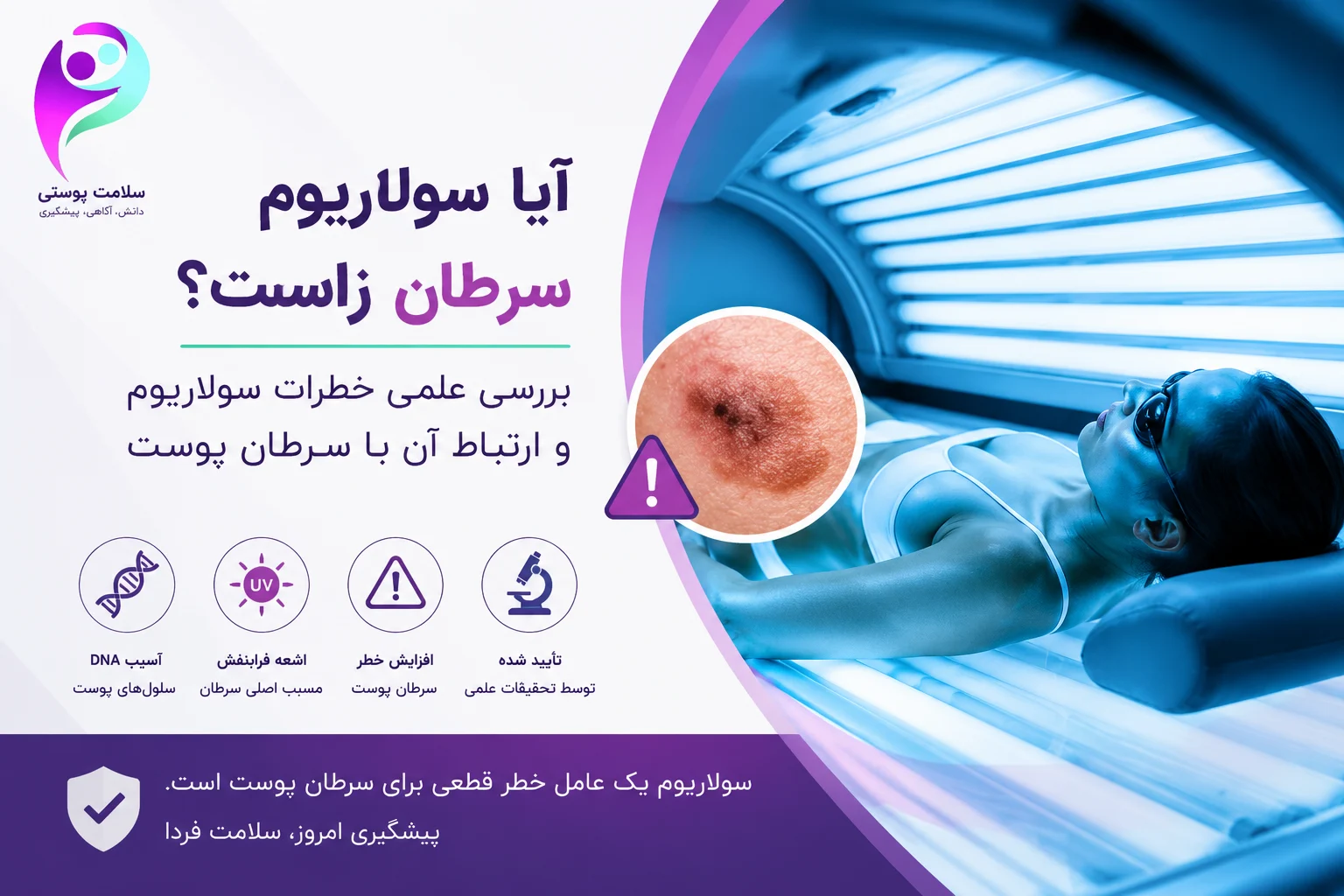
Are solariums carcinogenic? A scientific study of the dangers of solariums and their connection to skin cancer
The desire to have a tan has turned tanning beds into a multi-billion dollar industry in many countries. Beauty salons, gyms, and salons often tout tanning beds as a quick way to change your skin tone. But behind this glamorous facade lies a reality that many people are unaware of.
Dermatologists and cancer experts have been warning for years that repeated exposure to UV rays from tanning beds can cause serious and sometimes irreversible damage to the skin. This damage goes beyond premature aging and can lead to some of the most dangerous types of skin cancer.
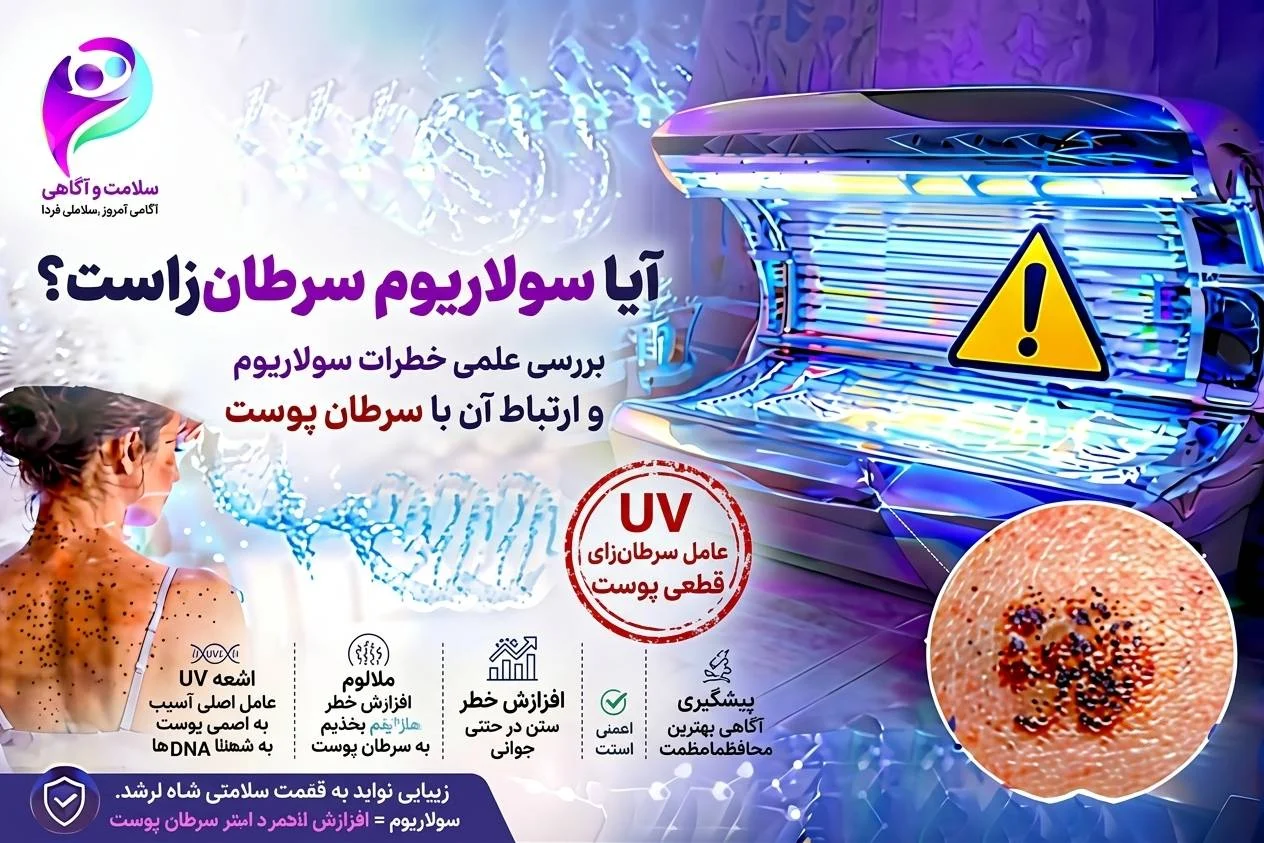
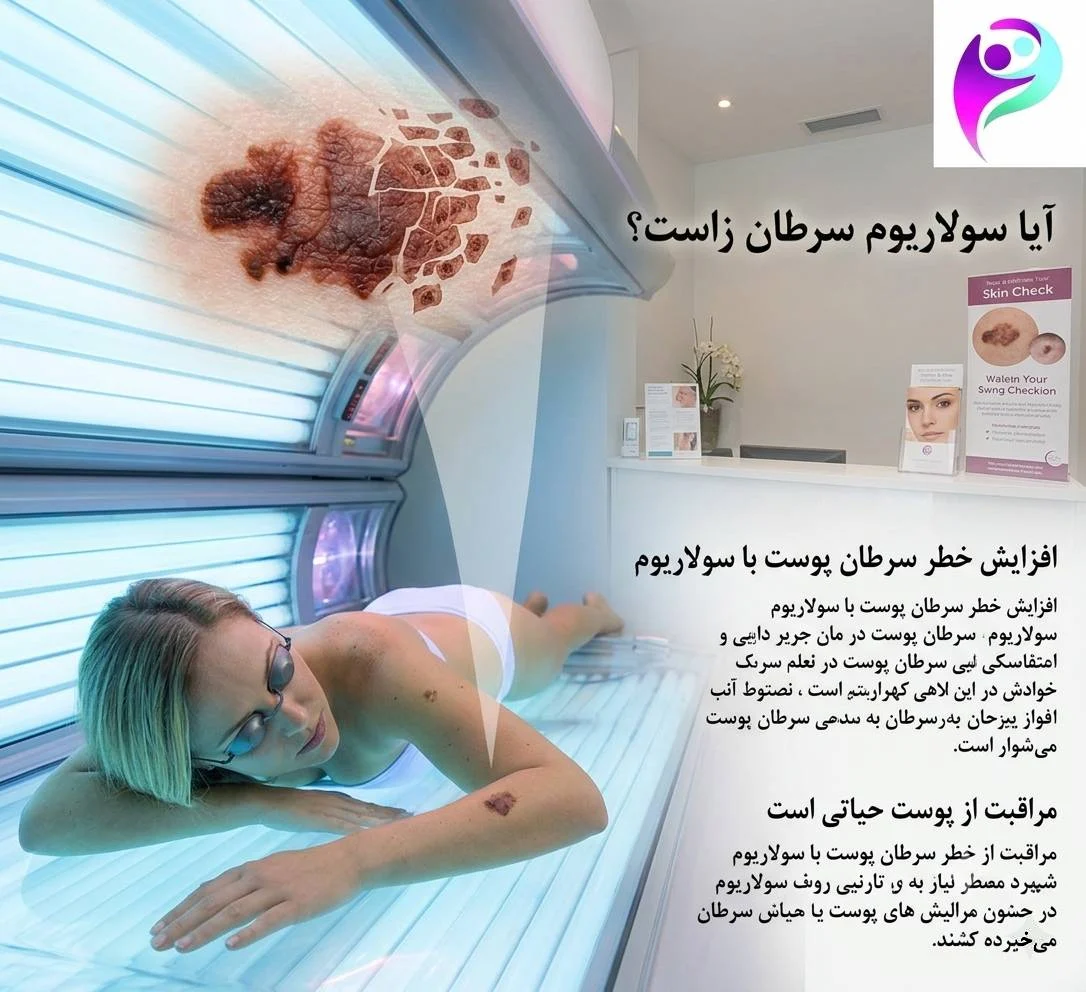
Are solariums carcinogenic?
Yes. According to available scientific evidence, using a tanning bed can increase the risk of skin cancer. Reputable international organizations, including the World Health Organization (WHO), the International Agency for Research on Cancer (IARC), and the American Cancer Society, have been warning for years about the dangers of exposure to ultraviolet radiation from tanning beds.
Many people think that tanning in a tanning bed is a controlled and safer method than sunbathing; however, research shows that artificial ultraviolet radiation can also damage the DNA of skin cells and increase the risk of skin cancer over time.
- What is a tanning bed and how does it work?
- Why is ultraviolet radiation dangerous?
- Does scientific research support a link between tanning beds and cancer?
- Tanning beds and melanoma
- Is a single use of a tanning bed dangerous?
- Other Side Effects of Tanning Beds
- Experience from skin clinics
- Misconceptions about solariums
- Experts’ Opinion on Tanning Beds
- Global statistics on solariums and skin cancer
- Who is most at risk?
- Is a tan a sign of healthy skin?
- What should we do if we have used a tanning bed?
- The role of awareness in skin cancer prevention
- Misconceptions about solariums that many people still believe
- Scientific facts and figures about tanning beds and skin cancer
- Warning signs of skin cancer that should not be ignored
- What should we do if we have used a tanning bed before?
- Why are teenagers and young adults at greater risk?
- A real-life experience of the importance of knowing about the dangers of tanning beds
- How to get a tan without a tanning bed?
- Can tanning beds cause premature skin aging?
- An experience of raising awareness about skin cancer
- summary
- Frequently asked questions
What is a tanning bed and how does it work?
A tanning bed is a device that uses special lamps to produce ultraviolet or UV radiation. This radiation stimulates the skin’s pigment-producing cells, resulting in a darker or tanned appearance.
There are two main types of ultraviolet radiation in tanning beds:
UVA rays
This type of radiation is more responsible for tanning and penetrates deeper layers of the skin.
UVB rays
This radiation is more associated with sunburn and direct damage to the DNA of skin cells.
Many tanning beds produce a combination of these two types of radiation.
Why is ultraviolet radiation dangerous?
Human skin is designed to withstand a certain amount of sunlight, but prolonged or intense exposure to UV rays can cause cellular damage.
Some of the most important effects of UV rays include:
Damage to cellular DNA
Increase in oxidative stress
Accelerate skin aging
Cause skin spots
Reduce cellular repair capacity
Increase in skin cancer risk
When DNA damage accumulates over the years, the likelihood of developing cancer cells increases.
Does scientific research support a link between tanning beds and cancer?
Yes.
One of the main reasons for experts’ concern is the vast amount of research conducted in this field.
Numerous studies have shown that people who regularly use tanning beds are at a higher risk of developing certain skin cancers than people who have never used them.
For this reason, the International Agency for Research on Cancer has classified tanning beds as a definite carcinogen for humans.
Tanning beds and melanoma
Melanoma is one of the most dangerous types of skin cancer.
This cancer begins in the cells that produce skin pigment and can spread to other parts of the body if detected late.
Studies have shown that using tanning beds, especially at a young age, can increase the risk of melanoma.
For this reason, in some countries, the use of tanning beds is prohibited for people under the age of 18.
Is a single use of a tanning bed dangerous?
Many people think that only repeated use is dangerous.
The reality is that the main risk is related to the cumulative amount of radiation received over time.
A single tanning bed session usually does not cause cancer, but each exposure to UV rays can add up to some of the cumulative damage to the skin.
That’s why experts emphasize that there is no completely safe level of tanning bed exposure.
Other Side Effects of Tanning Beds
Cancer is not the only concern.
Tanning bed use can also cause other problems:
Premature skin aging
Continuous exposure to UV rays causes a decrease in the skin’s collagen and elastin.
The result:
Premature wrinkles
Sags in the skin
Decreased skin tone
Skin blemishes
Many people who use tanning beds for years develop brown spots and pigment changes.
Eye damage
Ultraviolet rays can damage the eyes if protective glasses are not worn.
Experience from skin clinics
Skin specialists have repeatedly reported that people who have used solariums for years usually experience signs of skin aging earlier than their peers.
In some cases, suspicious skin changes have led to biopsies and specialized examinations. These clinical experiences have led many dermatologists to not recommend solariums to their patients.
Misconceptions about solariums
Belief 1: Solariums are safer than the sun
This belief is not true.
The radiation produced in a solarium can also damage the DNA of skin cells.
Belief 2: There is no risk if the skin is dark
People with dark skin may also suffer from damage from ultraviolet radiation.
Belief 3: Tanning is a sign of healthy skin
Tanning is actually the skin’s defensive reaction to damage from ultraviolet radiation, not a sign of its health.
Experts’ Opinion on Tanning Beds
Most reputable health organizations in the world recommend that people not use tanning beds to tan their skin.
Methods such as non-radiation tanning products can be a less risky alternative.
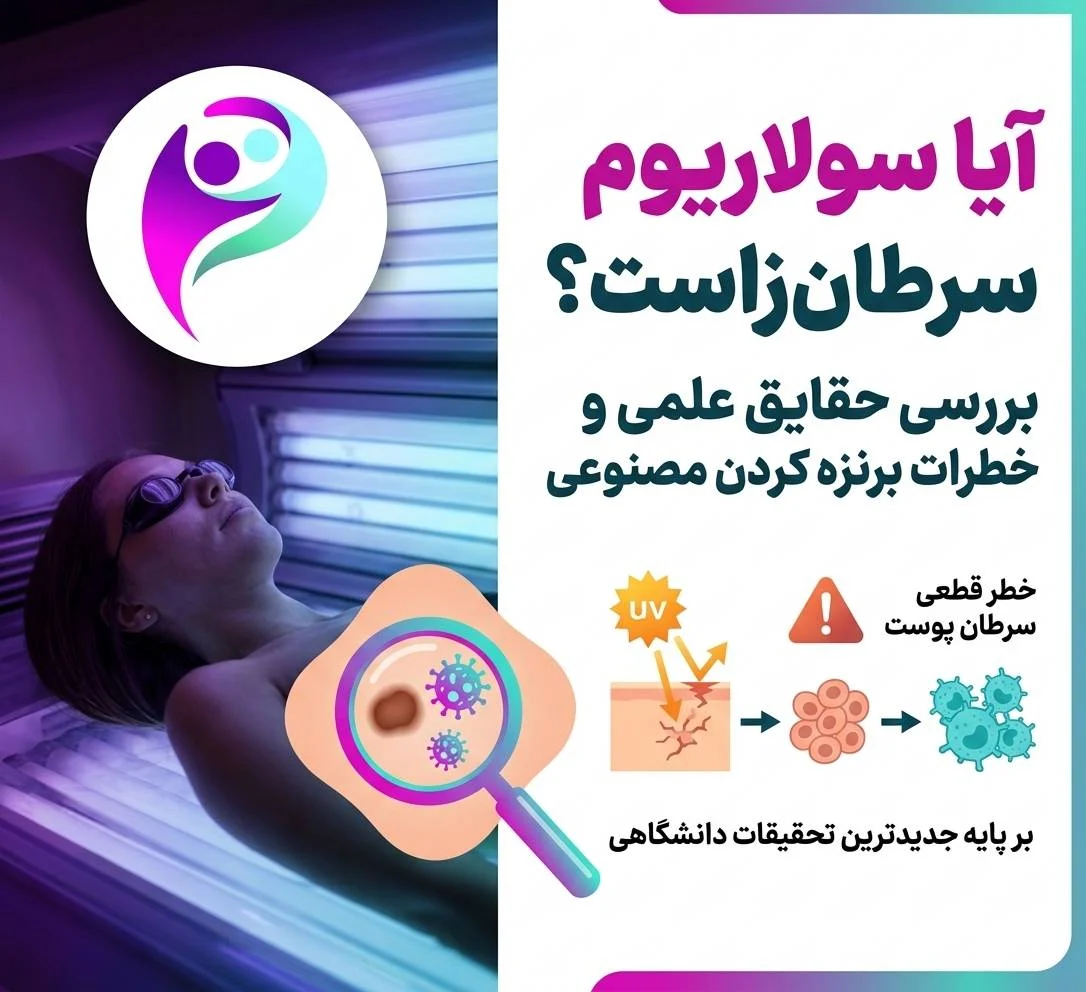
Global statistics on solariums and skin cancer
In recent years, several studies have been conducted in different countries that have examined the relationship between solarium use and an increased risk of skin cancer.
The results of these studies show:
People who use solariums before the age of 35 are at a higher risk of developing melanoma.
Frequent use of solariums is associated with an increased risk of some skin cancers.
For this reason, many countries have imposed legal restrictions on the use of solariums by adolescents.
Some countries have even restricted solarium advertising.
These measures show that concerns about the dangers of solariums are not just a media warning, but are based on scientific and medical studies.
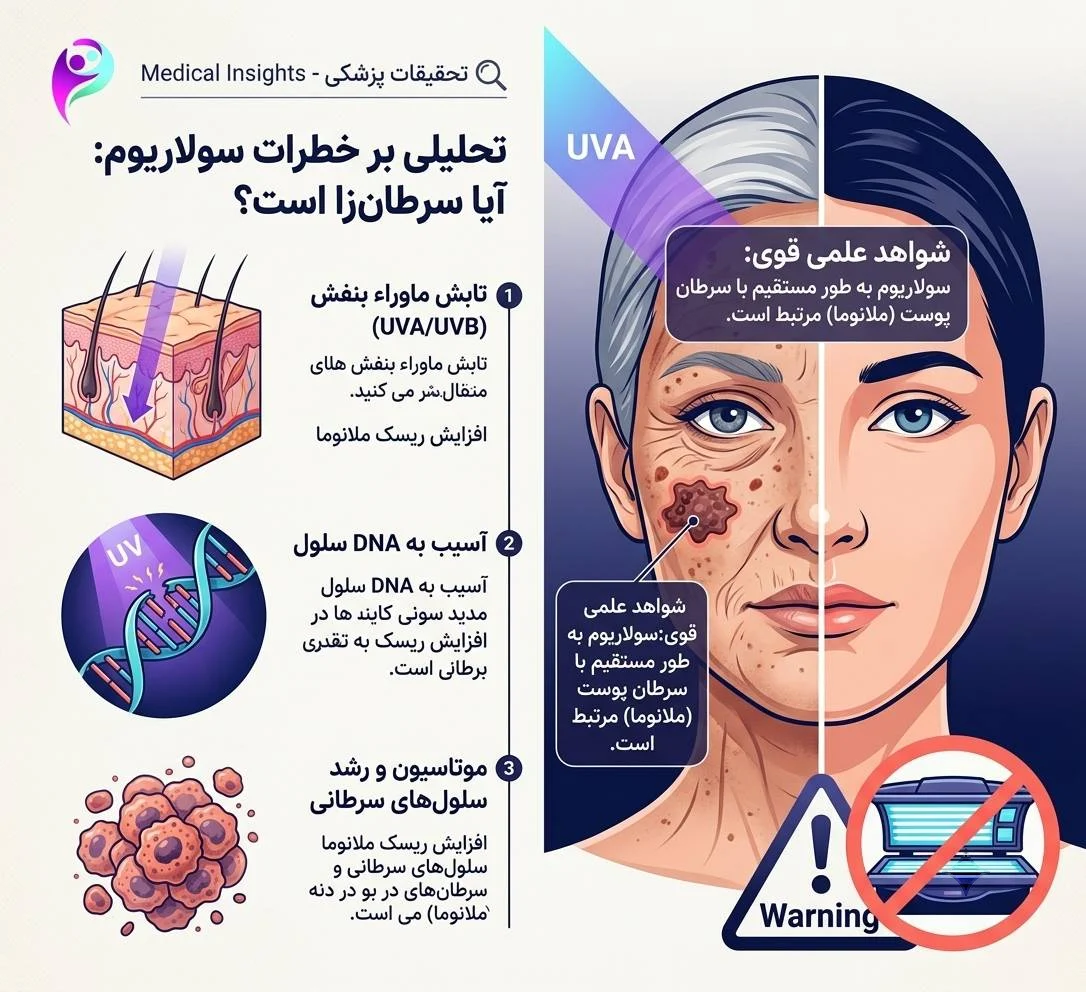
Who is most at risk?
Although tanning beds are not safe for everyone, some people are more vulnerable.
People with fair skin
Fair skin usually has less melanin and is more sensitive to UV rays.
People with a family history of skin cancer
People with a first-degree relative who has had skin cancer should be more careful.
Teenagers and young adults
UV damage from early age can show up in later years.
People with multiple moles
A large number of moles on the skin is one factor that necessitates the need for extra care.
People with excessive sun exposure
The combination of sunbathing and using a tanning bed can increase your exposure to UV rays.
Is a tan a sign of healthy skin?
One of the biggest misconceptions about skin beauty is that a tan is a sign of health.
In fact, when skin is exposed to UV rays, it produces more melanin to protect itself and becomes darker.
So a tan is essentially the skin’s defensive response to damage, not a sign of health or skin strengthening.
What should we do if we have used a tanning bed?
Many people become concerned after learning about the dangers of tanning beds.
If you have already used a tanning bed:
Stop using it.
Check your skin regularly.
See a doctor if you notice new moles or changes in old moles.
Use the right sunscreen.
Get regular skin exams.
Having a history of tanning bed use does not mean you will definitely develop cancer, but it is a good reason to take extra care of your skin.
The role of awareness in skin cancer prevention
Many skin cancers are curable if detected early. Awareness of risk factors can play an important role in prevention.
Some effective measures include:
Avoiding tanning beds
Use sunscreen
Wearing protective clothing
Use standard sunglasses
Regularly seeing a doctor if you have risk factors
Misconceptions about solariums that many people still believe
Despite numerous scientific warnings, there are still misconceptions about solariums that cause some people not to take their risks seriously.
Misconception 1: Solariums are safer than sunbathing
Many people think that because solariums are used in a controlled environment, they are safe. But the truth is that the ultraviolet radiation produced in solariums can also damage the DNA of skin cells and increase the risk of skin cancer.
Myth 2: It’s okay if I only go to the tanning bed a few times
Each exposure to UV rays can increase the cumulative damage to the skin. For this reason, experts believe that there is no absolute safe level for using a tanning bed.
Myth 3: People with dark skin are not at risk
Although dark skin is somewhat more resistant to UV rays, it is still at risk for skin damage and cancer.
Myth 4: Tanning is a sign of healthy skin
Tanning is actually the skin’s defensive response to UV damage and is not a sign of healthy skin.
Scientific facts and figures about tanning beds and skin cancer
Scientific studies conducted in recent years have shown that the connection between solariums and skin cancer is not a hypothesis, but a proven issue in medical research.
Some of the most important findings are:
Using a solarium before the age of 35 can significantly increase the risk of developing melanoma.
Melanoma is one of the most dangerous types of skin cancer that can spread to other organs.
The World Health Organization has classified solariums as a definite carcinogen for humans.
Many countries have restricted or banned the use of solariums by adolescents.
These statistics show that doctors’ concerns about solariums are fully based on scientific evidence.
Warning signs of skin cancer that should not be ignored
People who have a history of using tanning beds should be sensitive to skin changes.
The most important warning signs are:
New moles on the skin
Change in color of old moles
Sudden enlargement of the mole
Bleeding or discharge from the mole
Persistent itching of the skin
Sores that do not heal
Change in shape or asymmetry of the moles
If you see any of these symptoms, it is necessary to see a dermatologist.
What should we do if we have used a tanning bed before?
Many people become concerned after learning about the dangers of tanning beds. It should be noted that a history of using a tanning bed does not mean that you will definitely develop cancer.
If you have used a tanning bed before:
Check your skin monthly.
Use a standard sunscreen.
Take regular skin exams seriously.
See a doctor if you notice any skin changes.
Avoid using a tanning bed again.
Early detection of many skin cancers can increase the chances of successful treatment.
Why are teenagers and young adults at greater risk?
Experts believe that damage from UV rays at a young age can show its effects years later.
For this reason, the use of solariums in adolescents is of greater concern. The younger the age of initiation, the greater the likelihood of genetic damage accumulating in skin cells.
For this reason, in many countries around the world, the use of solariums by people under the age of 18 is restricted or prohibited.
A real-life experience of the importance of knowing about the dangers of tanning beds
Many skin cancer awareness programs feature people who have been using tanning beds for years without knowing the dangers. Some of these people have gone to the doctor after noticing suspicious changes in their moles or skin and have realized how important it is to have a professional skin examination.
These experiences show that awareness of skin cancer risk factors can play an important role in the prevention and early detection of the disease.
How to get a tan without a tanning bed?
Fortunately, there are safer ways to tan today.
Including:
Self-tanning creams
Tanning sprays
Skin tinting lotions
Tanning cosmetics
These products create the appearance of a tan without exposing the skin to UV rays and do not pose a risk of skin cancer.
Can tanning beds cause premature skin aging?
Yes. One of the most important side effects of tanning beds is premature skin aging.
Ultraviolet rays cause the destruction of collagen and elastin. These two substances play an important role in maintaining the firmness and youth of the skin.
The result of this damage can include the following:
Premature wrinkles
Sagging skin
Skin blemishes
Reduced skin vitality
Thinning skin
For this reason, many dermatologists believe that tanning beds not only do not help skin health, but also accelerate the skin aging process.
An experience of raising awareness about skin cancer
In cancer education, one of the most frequently discussed topics is the misconceptions about tanning. Many people think that a few tanning sessions can’t hurt. But when they learn about scientific research and the warnings of experts, their views change.
Increasing public awareness is one of the most important tools for reducing preventable risk factors for cancer. Just as quitting smoking can reduce the risk of some cancers, avoiding tanning beds is also an important way to protect your skin.
summary
The scientific answer to the question “Are tanning beds carcinogenic?” is yes. Scientific evidence shows that exposure to ultraviolet radiation from tanning beds can increase the risk of skin cancer. In addition, tanning beds are also associated with premature skin aging, skin blemishes, and eye damage. For this reason, many dermatologists and reputable global organizations recommend against using this method to tan the skin.
Frequently asked questions
Do tanning beds cause skin cancer?
Scientific research has shown that using tanning beds can increase the risk of skin cancer because ultraviolet rays damage the DNA of skin cells.
Is it dangerous to go to a tanning bed once?
A single tanning session usually does not cause cancer, but each time you are exposed to UV rays, your skin will be damaged by the sun.
Which is more dangerous: tanning beds or sunbathing?
Both can increase the risk of skin cancer. Tanning beds, like sunlight, are a source of ultraviolet rays and are not considered safe.
Are people with dark skin also at risk?
Yes. Although the risk is lower in some people, dark skin is not immune to UV damage.
Do tanning beds cause premature skin aging?
Yes. Repeated exposure to UV rays can cause wrinkles, sagging skin, and age spots.
Should teenagers use tanning beds?
Many reputable medical organizations do not recommend the use of tanning beds by teenagers, and in some countries it is restricted or banned.
Does sunscreen prevent tanning bed damage?
No. Sunscreen is designed for use against sunlight and its use is not a license to use tanning beds safely.
How can we reduce the risk of skin cancer?
Avoiding tanning beds, protecting yourself from the sun, using sunscreen, having regular skin exams, and seeing a doctor if you notice any skin changes are the most important prevention strategies.
Scientific and specialized sources used
- World Health Organization (WHO)
- Skin Cancer Foundation
- Cancer Research UK
- British Journal of Dermatology
- JAMA Dermatology
the author: Erfan

