
What Does a Cancerous Mole Look Like? Signs, Differences from Normal Moles, Warning Symptoms, and When to See a Doctor

It is important to understand that not all skin cancers begin as moles. Some develop as entirely new spots, patches, or sores on the skin. Therefore, any persistent or unusual skin change should be evaluated by a healthcare professional, even if it does not resemble a typical mole.

What Does a Cancerous Mole Look Like?

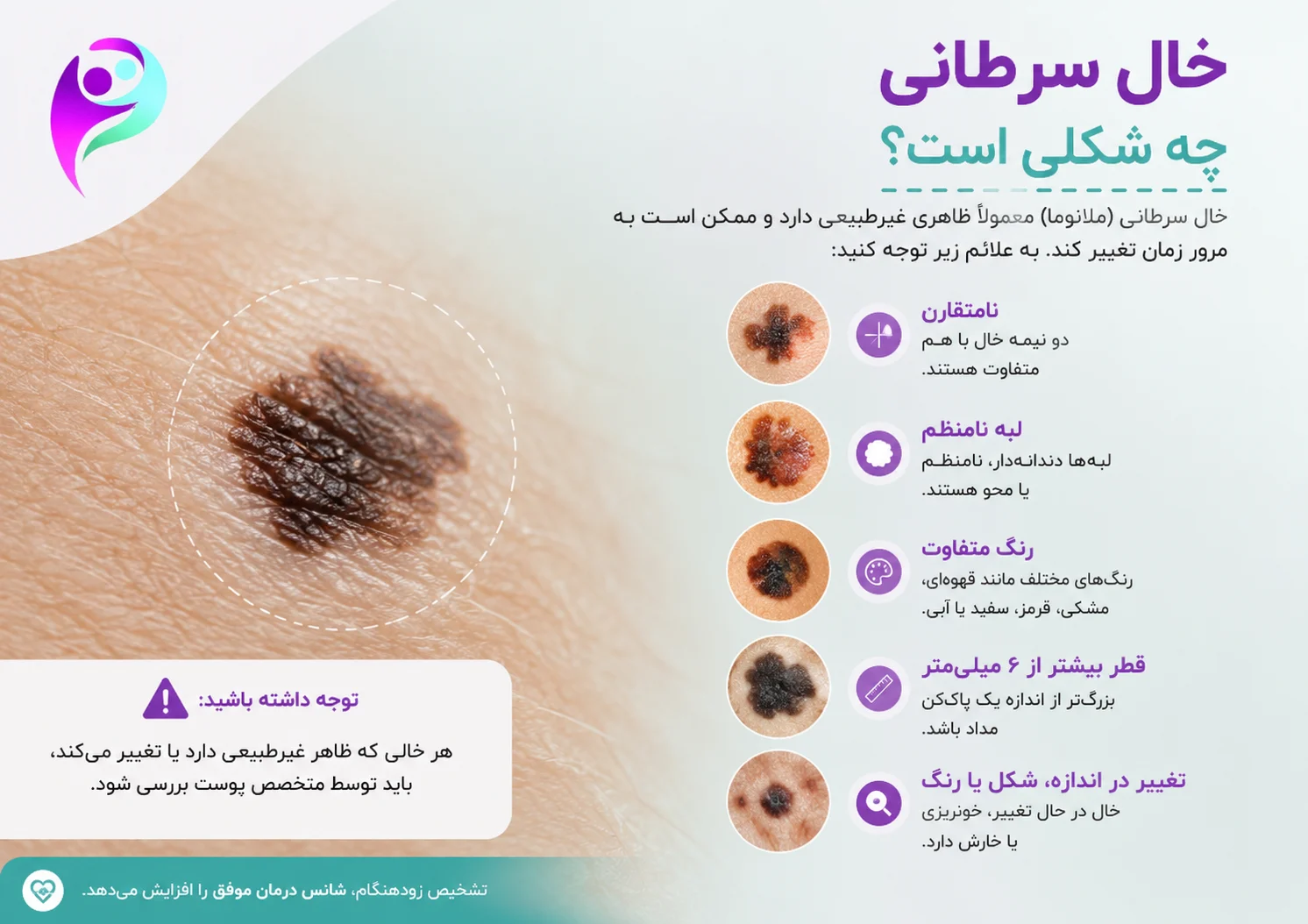
A cancerous mole typically changes in size, shape, color, or border over time. Warning signs include asymmetry, irregular edges, multiple colors, gradual enlargement, bleeding, itching, or a sore that does not heal. However, not every unusual mole is cancerous, and only a dermatologist can make a definitive diagnosis through a clinical examination and, if necessary, a biopsy.

Most people have several moles on their skin throughout their lives, and the vast majority of them are completely harmless. However, some moles may develop changes that require medical evaluation. When people notice a mole becoming darker, larger, or changing in appearance, they often ask:

“What does a cancerous mole look like?”

Recognizing suspicious skin changes is one of the most effective ways to detect skin cancer early. Many forms of skin cancer—especially melanoma—have a much higher treatment success rate when diagnosed at an early stage. For this reason, dermatologists encourage everyone to become familiar with their skin and pay attention to any unusual changes.

In this article, you’ll learn what a cancerous mole looks like, how it differs from a normal mole, when you should seek medical advice, and how to better protect your skin.

What Is a Cancerous Mole?

A cancerous mole is a skin lesion caused by the abnormal growth of pigment-producing cells (melanocytes) or other skin cells. The most serious type associated with changing moles is melanoma, an aggressive form of skin cancer.

What Does a Cancerous Mole Look Like?

There is no single appearance that defines a cancerous mole. Instead, dermatologists evaluate a combination of warning signs.

Common characteristics include:

  • An asymmetrical shape
  • Irregular or uneven borders
  • Multiple colors within the same mole
  • Gradual enlargement
  • Noticeable changes over weeks or months
  • Persistent itching or burning
  • Bleeding without injury
  • Crusting or scaling
  • Ulceration
  • A mole becoming raised after previously being flat

If you notice one or more of these changes, it is advisable to schedule an examination with a dermatologist.

خال سرطانی چه شکلی است

The ABCDE Rule: A Simple Way to Evaluate Moles

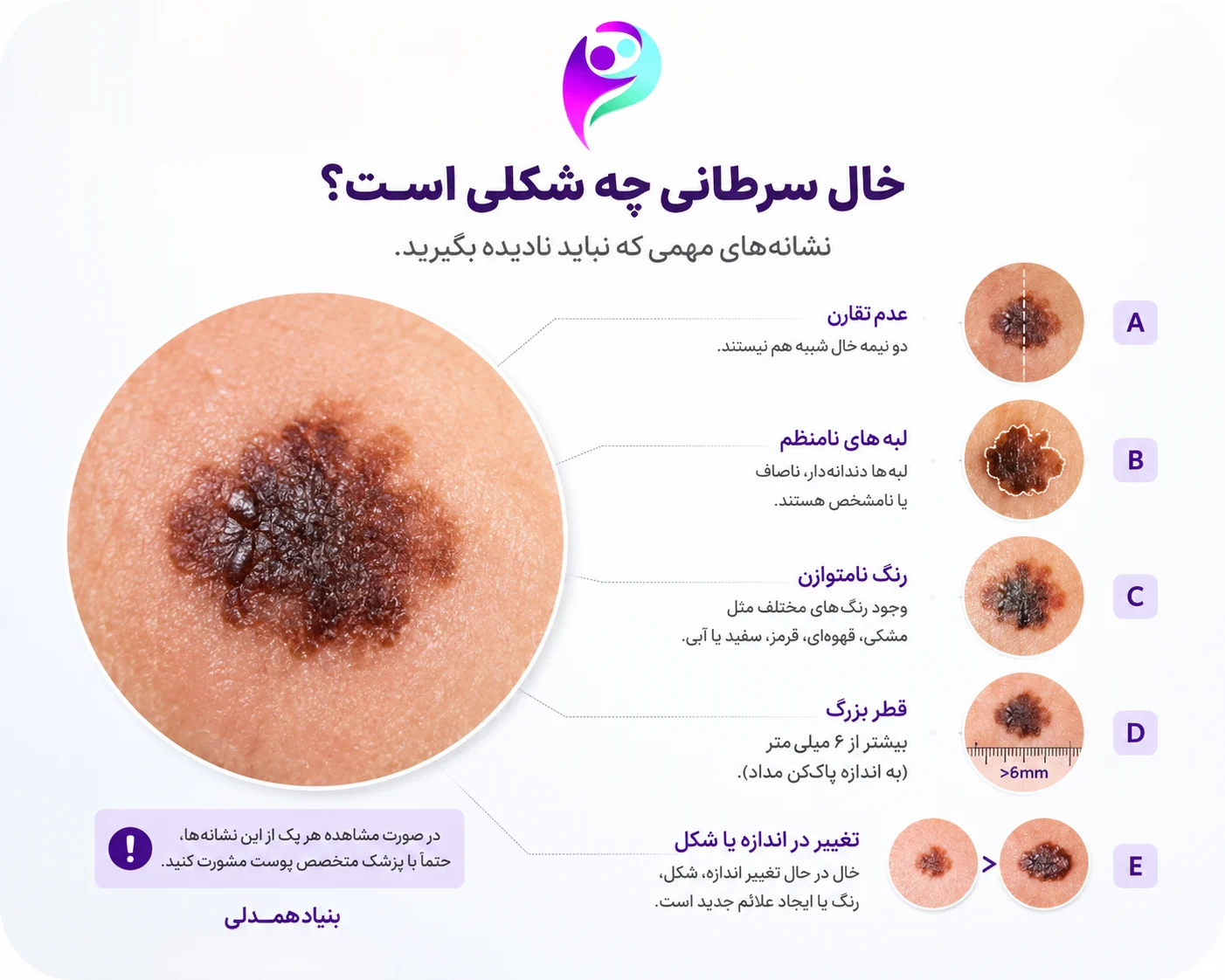
One of the most widely used methods for identifying suspicious moles is the ABCDE Rule, recommended by dermatologists around the world.

A – Asymmetry

A healthy mole is usually symmetrical.

If one half of the mole looks noticeably different from the other, it should be evaluated by a healthcare professional.

B – Border

Normal moles usually have smooth, clearly defined borders.

Suspicious moles may have:

  • Jagged edges
  • Blurred outlines
  • Uneven borders

C – Color

Healthy moles generally have one consistent color.

A suspicious mole may contain several different shades, including:

  • Brown
  • Black
  • Red
  • White
  • Blue

Multiple colors within a single mole should always be assessed by a dermatologist.

D – Diameter

Although size alone is not enough to diagnose skin cancer, a mole larger than approximately 6 millimeters or one that continues to grow deserves medical attention.

E – Evolution

The most important warning sign is change over time.

Any change in:

  • Size
  • Shape
  • Color
  • Elevation
  • Symptoms such as itching, bleeding, or pain

should be evaluated promptly.

Normal Mole vs. Cancerous Mole

Feature Normal Mole Cancerous or Suspicious Mole
Shape Symmetrical Asymmetrical
Color Uniform Multiple colors
Border Smooth and regular Irregular or blurred
Size Stable Increasing over time
Growth No significant change Progressive enlargement
Bleeding No May occur
Itching Rare May be present
Ulceration No May develop

Is Every Large Mole Cancerous?

No.

One of the most common misconceptions is that every large or dark mole is cancerous.

In reality, many people naturally have large moles that remain completely benign throughout their lives.

The most important factor is change, not simply the size or color of the mole.

Do Cancerous Moles Hurt?

In many cases, early-stage cancerous moles cause no pain at all.

بیشتر بخوانید  Nutrition during chemotherapy for colon cancer |A complete diet guide to reduce complications and strengthen the body

This is why waiting for pain before seeking medical attention can delay diagnosis.

As skin cancer progresses, some people may experience:

  • Pain
  • Persistent itching
  • Burning sensations
  • Bleeding
  • Ulceration

However, these symptoms often appear later than the initial visual changes.

Where Do Cancerous Moles Usually Appear?

Cancerous moles can develop anywhere on the body, but they are most commonly found on areas frequently exposed to sunlight.

These include:

  • Face
  • Nose
  • Neck
  • Ears
  • Shoulders
  • Back
  • Arms
  • Hands

In women, melanoma is particularly common on the lower legs, while in men it is more frequently found on the back.

Are Cancerous Moles Always Black?

No.

Many people believe that a cancerous mole must be black, but this is incorrect.

Cancerous moles may appear:

  • Brown
  • Black
  • Pink
  • Red
  • White
  • Blue
  • Skin-colored
  • Or contain several colors at once

For this reason, color alone cannot determine whether a mole is cancerous.

Experience

Health awareness campaigns and dermatology clinics consistently show that people who pay close attention to changes in their skin are more likely to receive an early diagnosis if a suspicious lesion develops. Individuals who seek medical evaluation soon after noticing changes in a mole often begin treatment while the disease is still in its earliest stages, leading to significantly better outcomes. These observations highlight the importance of becoming familiar with your own skin and taking persistent changes seriously.

Why Is Early Detection So Important?

Many forms of skin cancer—especially melanoma—are highly treatable when diagnosed early.

Performing regular skin self-examinations and consulting a dermatologist whenever you notice suspicious changes can greatly improve the chances of successful treatment and reduce the risk of complications.

خال سرطانی چه شکلی است

Types of Suspicious Moles You Should Never Ignore

Not every unusual-looking mole is cancerous, but certain types of moles are more likely to require medical evaluation. Learning to recognize these lesions can help identify skin cancer at an earlier stage.

Atypical (Dysplastic) Moles

An atypical mole, also known as a dysplastic nevus, often appears larger than an ordinary mole and may have irregular borders or uneven coloration.

Although dysplastic moles are not cancerous themselves, people who have multiple atypical moles may have a higher risk of developing melanoma compared with the general population.

Dermatologists often recommend regular skin examinations for individuals with numerous atypical moles.

Melanoma

Melanoma is the most aggressive and potentially life-threatening type of skin cancer.

It develops from melanocytes, the pigment-producing cells responsible for skin color.

Melanoma may appear as:

  • A completely new mole
  • An existing mole that begins changing
  • A dark patch with irregular borders
  • A lesion that continues to evolve over time

Because melanoma can spread to other organs if left untreated, early diagnosis is extremely important.

What Color Is a Cancerous Mole?

One of the strongest warning signs is uneven pigmentation.

A suspicious mole may contain several different colors, including:

  • Light brown
  • Dark brown
  • Black
  • Gray
  • Red
  • Pink
  • White
  • Blue

In contrast, most healthy moles usually have one uniform color.

How Large Is a Cancerous Mole?

Size alone cannot determine whether a mole is cancerous.

Some very small melanomas can already be dangerous, while many large moles remain completely benign throughout life.

However, medical evaluation is recommended if a mole:

  • Continues to grow
  • Becomes noticeably larger over time
  • Measures more than approximately 6 millimeters and continues changing

Changes over time are generally more important than size alone.

Are Cancerous Moles Raised?

Sometimes—but not always.

Some melanomas remain completely flat throughout their early stages, while others gradually become raised.

For this reason, both flat and raised lesions can be cancerous, and elevation alone should never be used to judge whether a mole is dangerous.

Is an Itchy Mole a Sign of Cancer?

Not necessarily.

A mole may itch because of dry skin, irritation, allergic reactions, or minor inflammation.

However, persistent itching combined with any of the following warning signs deserves medical evaluation:

  • Color changes
  • Enlargement
  • Bleeding
  • Ulceration
  • Changes in shape
  • Crusting

Is Bleeding From a Mole Dangerous?

Bleeding without any obvious injury should never be ignored.

Other warning signs include:

  • Fluid discharge
  • Persistent crusting
  • Ulcer formation
  • Cracking of the skin
  • Repeated bleeding
بیشتر بخوانید  Genetic association with colon cancer incidence | Is Colon Cancer Hereditary? A Complete Review of Genetic Factors

Although these symptoms do not automatically indicate skin cancer, they should always be evaluated by a dermatologist.

Who Is at Higher Risk of Skin Cancer?

Several factors increase the likelihood of developing melanoma and other skin cancers.

Major risk factors include:

  • Fair skin
  • Light-colored eyes
  • Blonde or red hair
  • Frequent sunburns
  • Indoor tanning bed use
  • Having many moles
  • A family history of melanoma
  • A weakened immune system
  • Long-term ultraviolet (UV) exposure

Having one or more of these risk factors does not mean someone will definitely develop skin cancer, but it does make regular skin examinations more important.

How Do Doctors Diagnose a Cancerous Mole?

A dermatologist does not rely solely on the appearance of a mole.

Diagnosis may include:

  • A complete skin examination
  • Dermoscopy (dermatoscopic examination)
  • Digital monitoring and photography
  • Skin biopsy when necessary
  • Laboratory pathology analysis

A biopsy remains the gold standard for confirming whether a suspicious mole is benign or malignant.

How Can You Reduce Your Risk of Skin Cancer?

Although skin cancer cannot always be prevented, healthy habits can significantly reduce your risk.

Practical prevention tips include:

  • Wear broad-spectrum sunscreen every day.
  • Reapply sunscreen every two hours while outdoors.
  • Avoid tanning beds completely.
  • Wear protective clothing and wide-brimmed hats.
  • Limit sun exposure between 10:00 a.m. and 4:00 p.m.
  • Perform monthly skin self-examinations.
  • Schedule regular dermatology checkups if you have increased risk factors.

Consistent sun protection remains one of the most effective ways to lower the risk of skin cancer.

Warning Signs Checklist

Symptom Should It Be Evaluated by a Doctor?
Change in color ✅ Yes
Increase in size ✅ Yes
Asymmetry ✅ Yes
Bleeding ✅ Yes
Persistent itching ✅ Yes
Ulceration ✅ Yes
Multiple colors ✅ Yes
A new mole appearing in adulthood Recommended

How Can You Tell If a Mole Might Be Cancerous?

A mole may be cancerous if it changes in size, shape, color, or border, becomes asymmetrical, develops multiple colors, grows over time, bleeds without injury, becomes itchy, or forms an ulcer. These warning signs do not necessarily mean skin cancer, but they should be evaluated by a dermatologist. A definitive diagnosis can only be made through a clinical examination and, if necessary, a skin biopsy.

When Should You See a Doctor About a Mole?

Many people delay visiting a dermatologist until a mole becomes painful or starts bleeding. However, most skin cancers—especially melanoma—cause no pain in their early stages. That is why dermatologists recommend taking any persistent change in the appearance of a mole or a new skin lesion seriously.

You should schedule an appointment with a dermatologist if you notice any of the following:

  • A new mole appearing after the age of 30
  • Changes in the size, color, or shape of an existing mole
  • Bleeding or discharge without injury
  • Persistent itching or burning
  • A mole that develops a sore or crusts over
  • Pain or tenderness in a mole
  • A mole that looks noticeably different from all your other moles (the “Ugly Duckling Sign”)

Early evaluation can lead to earlier diagnosis and significantly improve treatment outcomes.

Common Misconceptions About Cancerous Moles

False information about skin lesions often causes people to postpone medical evaluation. Understanding these common myths can help promote early detection and better skin health.

Myth 1: Every Dark Mole Is Cancerous

False.

Many dark-colored moles are completely benign. Color alone cannot determine whether a mole is cancerous. Dermatologists also evaluate symmetry, borders, size, evolution, and other clinical features.

Myth 2: If a Mole Doesn’t Hurt, It’s Safe

Incorrect.

Most melanomas are painless in their early stages. The first warning sign is often a visible change rather than pain.

Myth 3: Skin Cancer Only Affects Older Adults

Although the risk increases with age, skin cancer can occur in young adults as well—particularly in people with significant UV exposure, frequent tanning bed use, or multiple risk factors.

Myth 4: Touching or Removing a Mole Causes Cancer

There is no scientific evidence supporting this belief.

However, suspicious moles should only be removed or biopsied by qualified healthcare professionals to ensure accurate diagnosis and appropriate treatment.

Myth 5: If No One in My Family Has Skin Cancer, I Can’t Get It

Incorrect.

بیشتر بخوانید  Nutrition after radiation therapy for colon cancer | Proper diet for faster recovery

Most people diagnosed with skin cancer have no family history of the disease. Environmental factors, particularly ultraviolet (UV) radiation, play a major role.

How to Perform a Monthly Skin Self-Examination

A monthly skin self-exam is one of the simplest ways to detect suspicious changes early.

Follow these steps:

  1. Stand in front of a full-length mirror.
  2. Examine your face, ears, and neck.
  3. Check your hands, palms, and between your fingers.
  4. Inspect your arms and underarms.
  5. Examine your chest, abdomen, and sides of your body.
  6. Check your legs, feet, soles, and between your toes.
  7. Use a hand mirror—or ask a family member—to examine your back and scalp.

Taking photographs of your moles can also help you compare them over time and identify subtle changes.

The Role of Family Members in Early Detection

Some parts of the body—such as the back, shoulders, and scalp—are difficult to inspect on your own.

Family members can play an important role by noticing suspicious skin changes that might otherwise go unnoticed.

Sometimes, a simple observation by a spouse, child, or close relative leads to an early diagnosis that makes treatment much easier.

Experience

Public health awareness programs and dermatology clinics consistently report that people who regularly examine their skin are more likely to notice suspicious changes at an early stage. Dermatologists frequently emphasize that patients who seek medical attention soon after detecting changes in a mole often receive treatment while the disease is still highly manageable.

These real-world observations reinforce an important message: becoming familiar with your own skin and responding promptly to unusual changes can make a meaningful difference in protecting your long-term health.

Why You Can Trust This Information

This article is based on recommendations and clinical guidance from internationally recognized organizations specializing in dermatology, oncology, and cancer prevention.

Its purpose is to provide accurate educational information and increase public awareness. It is not intended to replace professional medical diagnosis or treatment.

In preparing this content, we have focused on:

  • Presenting evidence-based medical information in clear, accessible language
  • Avoiding unsupported health claims
  • Explaining warning signs without creating unnecessary fear
  • Aligning recommendations with current clinical guidelines and expert consensus

Conclusion

A cancerous mole is rarely identified by a single characteristic. Instead, dermatologists evaluate a combination of warning signs such as asymmetry, irregular borders, multiple colors, gradual enlargement, bleeding, itching, ulceration, or continuous evolution over time.

It is important to remember that these changes do not automatically mean cancer. Only a qualified dermatologist can determine whether a mole is benign or requires further testing, such as a biopsy.

Performing monthly skin self-examinations, protecting your skin from ultraviolet radiation, avoiding tanning beds, and seeking prompt medical evaluation for suspicious changes are among the most effective ways to support early detection and improve treatment success.

Frequently Asked Questions

Is every new mole a sign of skin cancer?

No. Most new moles are benign. However, any mole that changes over time or appears unusual should be evaluated by a dermatologist.

What color is a cancerous mole?

A cancerous mole may be brown, black, red, pink, white, blue, or contain several colors within the same lesion. Color variation is considered one of the warning signs.

Are cancerous moles always large?

No. Some melanomas are very small in their early stages. Continuous change is often more important than size alone.

Do cancerous moles hurt?

Usually not. Most early melanomas are painless and are first recognized because of visible changes rather than discomfort.

Can a cancerous mole itch?

Yes. Persistent itching—especially when accompanied by bleeding, color changes, or ulceration—should be medically evaluated.

Can skin cancer be diagnosed from a photograph?

No. Photographs can help raise awareness, but only a dermatologist can make a diagnosis through clinical examination and, when necessary, a biopsy.

Does using tanning beds increase the risk of cancerous moles?

Indoor tanning exposes the skin to ultraviolet radiation, which significantly increases the risk of melanoma and other forms of skin cancer.

Scientific References