
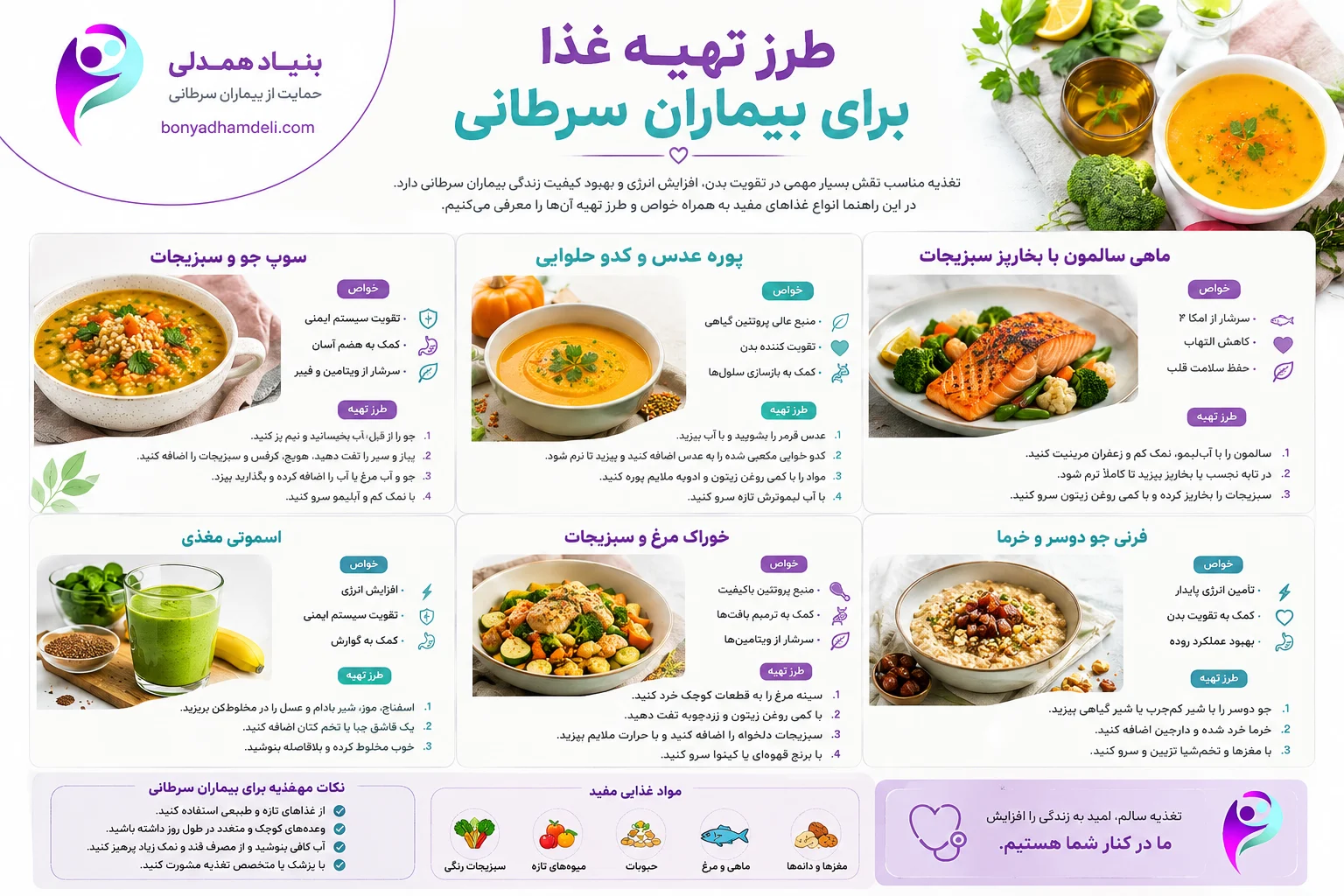
Healthy Recipes for Cancer Patients: A Complete Guide to Nutritious Meals During Cancer Treatment
The best meals for cancer patients are easy to digest, rich in protein and calories, and adapted to symptoms such as nausea, mouth sores, or loss of appetite. Foods like chicken soup, steamed fish, mashed potatoes, oatmeal, homemade smoothies, and rice porridge can help provide essential nutrients while being gentle on the digestive system. Meal choices should always be tailored to the patient’s condition and healthcare provider’s recommendations.
- Why Healthy Recipes Matter for Cancer Patients
- What Makes the Best Food for Cancer Patients?
- Key Characteristics of Healthy Meals for Cancer Patients
- How Should a Cancer Patient’s Meal Plan Be Organized?
- Best Foods During Chemotherapy
- Healthy Recipes for Cancer Patients: Practical Recipes for Every Stage of Treatment
- Chicken and Barley Soup for Cancer Patients
- Ingredients
- Instructions
- Creamy Mashed Potatoes
- Ingredients
- Instructions
- Steamed Chicken with Vegetables
- Ingredients
- Instructions
- Rice Pudding (Rice Porridge)
- Ingredients
- Instructions
- Almond Porridge
- Ingredients
- Instructions
- Soft Scrambled Eggs
- Instructions
- Best Nutrient-Dense Meals for Cancer Patients
- Foods to Avoid During Cancer Treatment
- Sample Daily Meal Plan for Cancer Patients
- How to Improve Appetite During Cancer Treatment
- Nutrition Tips for Cancer Patients Experiencing Different Symptoms
- Best Foods for Cancer Patients with Mouth Sores
- Best Foods for Constipation During Cancer Treatment
- Best Foods for Diarrhea During Cancer Treatment
- Common Nutrition Mistakes Cancer Patients Should Avoid
- Should Cancer Patients Follow a Special Diet?
- Practical Advice for Family Caregivers
- Evidence-Based Nutrition in Cancer Care
- Conclusion
- Frequently Asked Questions (FAQ)
Why Healthy Recipes Matter for Cancer Patients
Cancer and its treatments—including chemotherapy, radiation therapy, immunotherapy, and targeted therapy—often affect much more than cancer cells. Many patients experience side effects such as nausea, fatigue, dry mouth, mouth sores, difficulty swallowing, taste changes, weight loss, and decreased appetite.
These challenges make proper nutrition one of the most important aspects of supportive cancer care.
Learning how to prepare meals for cancer patients is not simply about cooking. It is about providing the body with enough energy, protein, vitamins, minerals, and fluids to help maintain strength throughout treatment.
There is no single diet that works for every cancer patient. Nutritional needs vary depending on the type of cancer, stage of disease, treatment method, age, overall health, and other medical conditions. For this reason, meal planning should always be personalized under the guidance of a physician or registered dietitian.
What Makes the Best Food for Cancer Patients?
Nutritious meals should provide adequate calories while remaining easy to eat and digest. The primary goals are preventing malnutrition, maintaining muscle mass, and supporting recovery throughout treatment.
A healthy meal for cancer patients should include:
- High-quality protein
- Adequate calories
- Easy digestion
- Fresh ingredients
- Proper food safety
- Healthy fats such as olive oil
- Appropriate amounts of fiber
- Limited added sugar
- Moderate sodium
- Soft texture when needed
Key Characteristics of Healthy Meals for Cancer Patients
| Feature | Benefit |
|---|---|
| High Protein | Supports tissue repair and muscle maintenance |
| Easy to Digest | Reduces digestive discomfort |
| Adequate Calories | Helps prevent unwanted weight loss |
| Soft Texture | Ideal for mouth sores and swallowing difficulties |
| Fresh Ingredients | Lowers the risk of foodborne infections |
| Healthy Fats | Provides long-lasting energy |
| Vitamins & Minerals | Supports overall body functions |
How Should a Cancer Patient’s Meal Plan Be Organized?
One common misconception is that patients should eat three large meals each day. In reality, many cancer patients tolerate smaller, more frequent meals much better, especially during chemotherapy.
A practical daily meal schedule may include:
- A light but nutritious breakfast
- Mid-morning snack
- Protein-rich lunch
- Afternoon snack
- Light dinner
- Optional bedtime snack
Eating smaller meals every two to three hours often improves calorie intake while reducing nausea and early fullness.
Best Foods During Chemotherapy
Chemotherapy frequently causes nausea, taste changes, constipation, diarrhea, and mouth sores. Because of these side effects, meals should be gentle on the digestive system while still providing adequate nutrition.
Common recommendations include:
- Homemade chicken soup
- Barley soup
- Mashed potatoes
- Soft cooked rice
- Steamed fish
- Boiled chicken breast
- Fully cooked eggs
- Rice pudding
- Almond porridge
- Pasteurized yogurt (if tolerated)
Deep-fried foods, spicy dishes, processed meats, and heavily seasoned meals are generally less suitable during treatment.

Healthy Recipes for Cancer Patients: Practical Recipes for Every Stage of Treatment
Proper nutrition during cancer treatment is not only about choosing healthy ingredients but also about preparing meals that are easy to eat, easy to digest, and rich in nutrients. The following recipes are designed to help patients meet their nutritional needs while coping with common treatment-related side effects such as nausea, fatigue, mouth sores, and loss of appetite.
Chicken and Barley Soup for Cancer Patients
Chicken and barley soup is one of the most recommended meals during chemotherapy. It provides high-quality protein, fluids, and complex carbohydrates while remaining gentle on the digestive system.
Ingredients
- 200 g skinless chicken breast
- 1 cup rolled barley
- 1 medium carrot
- 1 small zucchini
- 1 small potato
- 1 tablespoon extra virgin olive oil
- Low-sodium chicken broth
Instructions
- Cook the chicken breast until fully done and shred it into small pieces.
- In a separate pot, cook the barley with the chicken broth.
- Add the chopped vegetables and simmer until completely tender.
- Stir in the shredded chicken.
- Blend the soup if the patient has difficulty chewing or swallowing.
Nutritional Benefits
- Excellent source of lean protein
- Helps maintain hydration
- Easy to digest
- Suitable during chemotherapy
- Rich in vitamins and minerals from vegetables
Creamy Mashed Potatoes
Mashed potatoes are an ideal choice for patients experiencing mouth sores or swallowing difficulties.
Ingredients
- 2 medium potatoes
- ½ cup pasteurized milk
- 1 tablespoon olive oil
- Small amount of butter (if approved by the healthcare provider)
Instructions
Boil the potatoes until soft. Mash thoroughly with warm milk and olive oil until smooth and creamy. Avoid adding excessive salt or strong seasonings.
Why It’s Beneficial
- Soft texture
- Easy to swallow
- Provides carbohydrates for energy
- Gentle on sensitive mouths
Steamed Chicken with Vegetables
This meal offers high-quality protein while remaining light on the stomach.
Ingredients
- Skinless chicken breast
- Carrots
- Zucchini
- Broccoli
- Olive oil
Instructions
Steam or gently boil the vegetables until tender. Cook the chicken separately and shred or slice into small pieces before serving with the vegetables.
Benefits
- High protein
- Rich in vitamins
- Supports muscle maintenance
- Easy digestion
Rice Pudding (Rice Porridge)
Rice pudding is one of the easiest meals to tolerate when appetite is poor.
Ingredients
- Pasteurized milk
- Rice flour
- Small amount of honey (if appropriate)
Instructions
Mix rice flour with milk and cook over low heat while stirring continuously until thickened. Add honey only if approved by the healthcare provider.
Benefits
- Soft consistency
- Easy to digest
- Provides calories
- Suitable for patients with mouth discomfort
Almond Porridge
Almond porridge is a nutrient-dense meal that supplies healthy fats, plant protein, and calories.
Ingredients
- Blanched almonds
- Pasteurized milk
- Rice flour
Instructions
Grind the almonds into a fine powder. Combine with milk and rice flour, then cook over low heat until smooth.
Benefits
- High in healthy fats
- Energy dense
- Good source of plant protein
- Helpful for patients experiencing weight loss
Soft Scrambled Eggs
Eggs are among the highest-quality protein sources available and are easy to prepare.
Instructions
Cook eggs slowly over low heat with a small amount of olive oil until soft and fully cooked. Avoid overcooking, as this may make the texture dry.
Benefits
- Complete protein
- Supports tissue repair
- Quick to prepare
- Easy to chew
Best Nutrient-Dense Meals for Cancer Patients
| Meal | Primary Benefit |
|---|---|
| Chicken Soup | High protein and hydration |
| Steamed Fish | Omega-3 fatty acids and lean protein |
| Boiled Eggs | Complete protein |
| Rice Pudding | Easy digestion |
| Almond Porridge | High-calorie nutrition |
| Mashed Potatoes | Suitable for swallowing difficulties |
| Homemade Smoothies | Vitamins and calories |
| Pasteurized Yogurt | Protein and calcium |
| Soft Lentil Soup | Plant-based protein |
| Oatmeal | Fiber and sustained energy |
Foods to Avoid During Cancer Treatment
Certain foods may worsen digestive symptoms or increase the risk of foodborne illness, especially when the immune system is weakened.
It is generally recommended to limit or avoid:
- Deep-fried foods
- Fast food
- Undercooked meat
- Raw or undercooked eggs
- Unpasteurized dairy products
- Processed meats
- Sugary soft drinks
- Industrial pastries and sweets
- Extremely spicy foods
- Excessively salty meals
Sample Daily Meal Plan for Cancer Patients
| Meal | Suggested Foods |
|---|---|
| Breakfast | Oatmeal, boiled egg, pasteurized milk |
| Morning Snack | Banana or homemade smoothie |
| Lunch | Chicken soup or steamed fish with soft rice |
| Afternoon Snack | Yogurt or almond porridge |
| Dinner | Steamed chicken with vegetables or mashed potatoes |
| Evening Snack | Warm milk or rice pudding |
How to Improve Appetite During Cancer Treatment
Loss of appetite is one of the most common challenges during cancer therapy. While it cannot always be prevented, several practical strategies may help patients consume more nutrients.
- Eat small meals every two to three hours.
- Choose high-protein foods in small portions.
- Serve meals when appetite is strongest.
- Make meals visually appealing with colorful vegetables.
- Drink fluids between meals rather than immediately before eating.
- Serve foods warm instead of very hot if nausea is present.
- Reduce strong cooking odors by choosing steamed or baked dishes.
These approaches can improve nutritional intake while making eating a more comfortable experience during treatment.
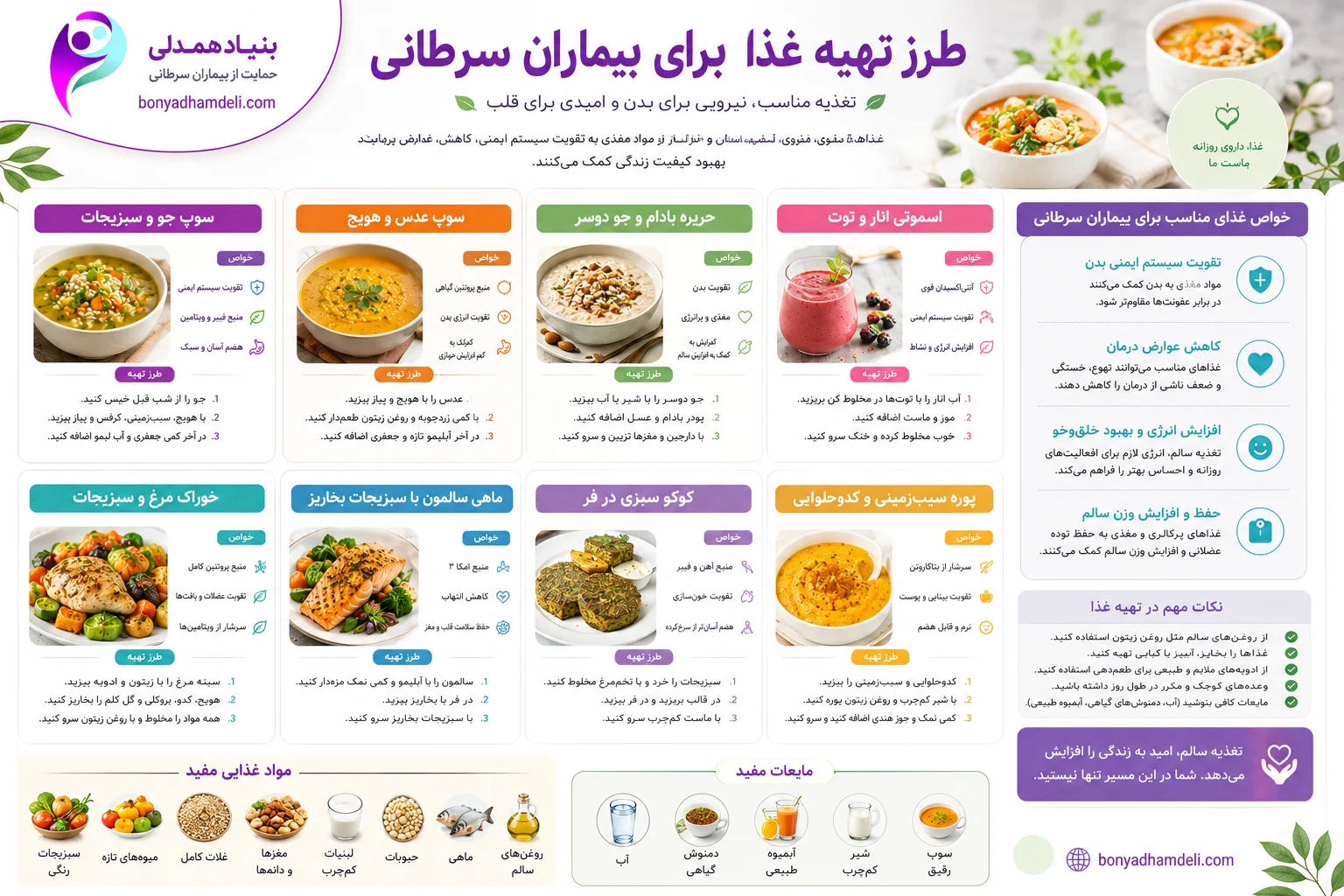
Nutrition Tips for Cancer Patients Experiencing Different Symptoms
Every person with cancer has unique nutritional needs. The type of cancer, treatment plan, and side effects all influence the foods that are most appropriate. Adjusting meals based on symptoms can improve comfort and help maintain adequate nutrition.
Best Foods for Cancer Patients with Nausea
Nausea is one of the most common side effects of chemotherapy and certain targeted therapies. Eating the right foods may help reduce discomfort.
Recommended Foods
- Plain chicken soup
- Soft white rice
- Boiled potatoes
- Toast
- Bananas
- Cooked apples
- Mild homemade smoothies
- Ginger tea (only if approved by the healthcare team)
Foods to Limit
- Fried foods
- Fatty meals
- Highly seasoned dishes
- Strong-smelling foods
- Carbonated beverages
Eating small portions several times a day is often easier than consuming large meals.
Best Foods for Cancer Patients with Mouth Sores
Oral mucositis can make chewing and swallowing painful. Choosing soft, smooth foods can reduce irritation and improve food intake.
Recommended Foods
- Rice pudding
- Almond porridge
- Pureed soups
- Mashed potatoes
- Pasteurized yogurt
- Oatmeal
- Homemade smoothies without acidic fruits
Foods to Avoid
- Citrus fruits
- Spicy foods
- Salty snacks
- Crunchy foods
- Hot beverages
Best Foods for Constipation During Cancer Treatment
Constipation is common due to medications, reduced activity, or changes in diet.
If approved by the healthcare provider, these foods may help:
- Oatmeal
- Pears
- Prunes
- Cooked vegetables
- Lentils
- Beans
- Olive oil
- Plenty of fluids
Regular light physical activity may also improve bowel function.
Best Foods for Diarrhea During Cancer Treatment
When diarrhea occurs, the goal is to replace lost fluids while choosing foods that are gentle on the digestive system.
Recommended options include:
- White rice
- Bananas
- Applesauce
- Boiled chicken
- Plain soup
- Mashed potatoes
- Toast
Persistent diarrhea or signs of dehydration require prompt medical evaluation.
Common Nutrition Mistakes Cancer Patients Should Avoid
Nutrition misinformation is widespread online. Some popular recommendations are not supported by scientific evidence and may even be harmful.
Common mistakes include:
- Eliminating all carbohydrates without medical advice
- Taking dietary supplements without consulting a physician
- Following extremely restrictive diets
- Believing in “miracle foods” that claim to cure cancer
- Eliminating all dairy or meat without nutritional guidance
- Using herbal remedies without discussing them with the oncology team
- Replacing complete meals with fruit juice
- Skipping meals because of poor appetite
A balanced eating plan remains the safest and most effective approach for most patients.
Should Cancer Patients Follow a Special Diet?
There is currently no scientifically proven diet that can cure cancer or completely prevent its progression.
However, research consistently supports a balanced eating pattern that includes:
- Adequate protein
- Fruits and vegetables
- Whole grains when tolerated
- Healthy fats
- Proper hydration
- Limited ultra-processed foods
Meal plans should always be individualized according to the patient’s medical condition, treatment stage, and nutritional status.
Practical Advice for Family Caregivers
Family members often play a central role in supporting proper nutrition.
Helpful strategies include:
- Never force the patient to eat.
- Offer small meals frequently.
- Prepare freshly cooked meals.
- Keep food presentation attractive.
- Respect the patient’s food preferences.
- Monitor weight regularly.
- Practice proper food hygiene.
- Consult a registered dietitian if significant weight loss occurs.
Supportive and stress-free mealtimes often improve food intake.
Evidence-Based Nutrition in Cancer Care
Current international oncology nutrition guidelines emphasize that early nutritional assessment is associated with better treatment tolerance and improved quality of life.
Patients who receive individualized nutritional support are generally less likely to experience severe weight loss, muscle wasting, or treatment interruptions.
For this reason, nutrition is considered an essential component of comprehensive cancer care rather than an optional addition.
Conclusion
Preparing healthy meals for cancer patients is about much more than cooking. Proper nutrition helps provide energy, preserve muscle mass, support recovery, and improve overall quality of life during treatment.
Meals such as chicken soup, steamed fish, mashed potatoes, rice pudding, almond porridge, homemade smoothies, and soft vegetables are often well tolerated and nutritionally valuable.
Every patient’s needs are different, and meal plans should always be personalized with guidance from healthcare professionals.
In addition to proper nutrition, emotional support, family involvement, and access to charitable organizations such as Hamdeli Foundation can make the cancer journey more manageable by providing practical assistance and compassionate care.
Frequently Asked Questions (FAQ)
What is the best food for cancer patients?
Foods rich in protein, calories, vitamins, and minerals—such as chicken soup, steamed fish, eggs, oatmeal, and homemade smoothies—are commonly recommended. The best choice depends on the patient’s condition and medical advice.
How many meals should a cancer patient eat each day?
Most patients tolerate five to six small meals throughout the day better than three large meals.
Can cancer patients eat eggs?
Yes. Fully cooked eggs are an excellent source of high-quality protein unless otherwise restricted by a healthcare provider.
Are spicy foods recommended during cancer treatment?
Generally no. Spicy foods may worsen nausea, mouth sores, and digestive discomfort.
What is the best drink for cancer patients?
Water, homemade smoothies, pasteurized milk (if tolerated), and nourishing soups are commonly recommended to maintain hydration and nutrition.
Can cancer patients eat red meat?
Lean, fully cooked red meat may be included in moderation if approved by the healthcare team.
Can smoothies replace regular meals?
Smoothies can provide valuable calories and nutrients when appetite is poor, but they should not permanently replace balanced meals.
Should cancer patients take nutritional supplements?
Dietary supplements should only be used under the supervision of a physician or registered dietitian.
Suggested Scientific References
- National Cancer Institute (NCI)
- ESPEN Clinical Nutrition Guidelines

