
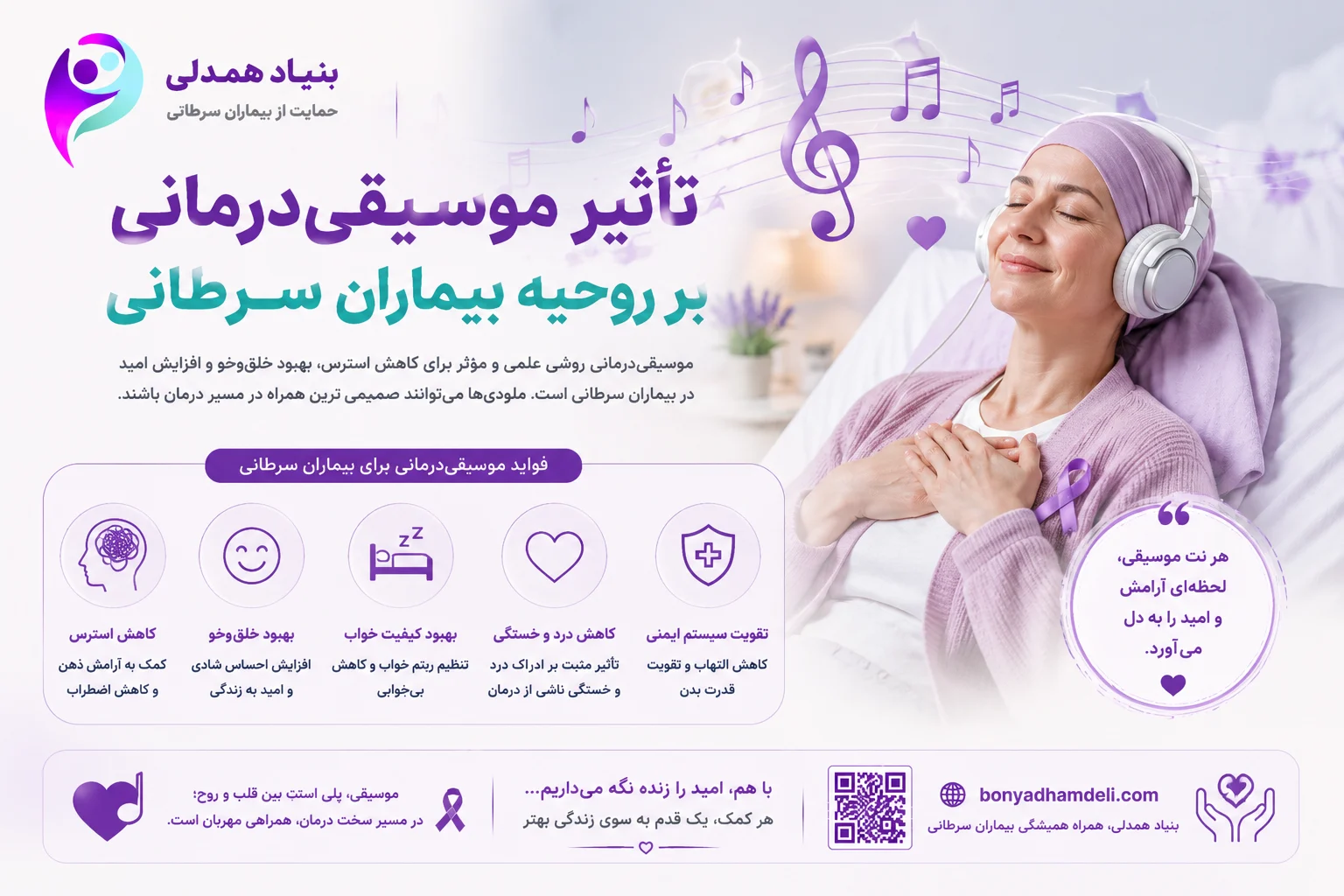
The effect of music therapy on the mood of cancer patients
Cancer is one of the most difficult and complex diseases that affects not only the body but also the soul and mind of patients. Along with medical treatments such as chemotherapy and radiotherapy, the use of complementary methods can significantly help improve the quality of life of patients. One of these methods is music therapy; a method that uses the amazing power of music to boost patients’ spirits and plays an effective role in reducing anxiety and increasing life expectancy.
In this comprehensive article, we will examine the role of music therapy in improving the spirits of cancer patients, its scientific benefits, methods of use, real examples, as well as practical advice for patients and their families.
The Hamdali Foundation Charity is a support group in the field of helping cancer patients, which aims to reduce treatment concerns, cover essential expenses, and boost patients’ spirits. This foundation, with public donations and the participation of donors, tries to make the path of treatment smoother for patients and their families. If you would like to support, you can do so through online payment, telephone contact, or online chat. Also, those who need help or advice can simply contact the foundation’s support team through these communication channels to receive the necessary guidance.
- What is music therapy?
- Scientific Benefits of Music Therapy for Cancer Patients
- Different Music Therapy Methods
- The role of music in different stages of cancer treatment
- Choosing the best type of music for cancer patients
- Successful Examples of Music Therapy for Cancer Patients
- Recommendations for patients and families
- The Role of Family in Music Therapy
- Misconceptions about music therapy
- Music Therapy and Its Role in the Immune System
- The effect of music on patients’ memory and concentration
- Music Therapy and Reducing Side Effects of Cancer Treatment
- Music Therapy for Children with Cancer
- Music Therapy for Seniors with Cancer
- Technology and Music Therapy
- Combining Music Therapy with Other Complementary Therapies
- The Role of Music Therapists and Counselors
- The Future of Music Therapy in Cancer Treatment
- Overview
- Conclusion
- Frequently Asked Questions (FAQ)
What is music therapy?
Music therapy is a complementary therapy that uses rhythm, melody, and harmony to stimulate the mind and emotions. It is used worldwide as part of psychotherapy and rehabilitation.
In cancer patients, music therapy can:
- Reduce stress and anxiety levels.
- Boost morale and motivation to fight the disease.
- Reduce feelings of loneliness and depression.
- Improve the quality of sleep and rest.
Scientific Benefits of Music Therapy for Cancer Patients
Several studies have shown that music has a direct effect on brain and nervous system function. Some of the most important benefits of music therapy include:
1. Reduce stress and anxiety
Cancer and its treatment process can cause a lot of anxiety. Listening to relaxing music reduces the level of the hormone cortisol (stress hormone) and gives the patient more peace of mind.
2. Improve mood and reduce depression
Music increases the sense of happiness and hope in patients by stimulating the secretion of the hormones dopamine and endorphins and prevents the occurrence of depression.
3. Reduce physical pain
Music therapy can act as a natural painkiller. Studies have shown that listening to music activates the body’s natural painkiller system.
4. Improve sleep quality
Many cancer patients suffer from insomnia. Soft and calm music can increase the quality of sleep and give the body more time to heal.
5. Strengthen social connections
Music therapy group sessions create a sense of solidarity, greater interaction and reduce isolation in patients.
Different Music Therapy Methods
Music therapy is not just listening to music, but includes a variety of methods that can be used depending on the patient’s condition:
Listening to music
Choosing calm and gentle songs to reduce anxiety and stress.
Playing an instrument
The patient can vent their emotions by playing a simple instrument such as the flute or piano.
Singing
Singing, especially in the company of patients or family, enhances a sense of hope and joy.
Composing and creating music
Some patients express their feelings and experiences of the disease by creating simple melodies.
Group music therapy sessions
Being in a group and listening to or performing music as a group increases a sense of belonging and social support.
The role of music in different stages of cancer treatment
Cancer patients have different needs at different stages of treatment, and music can play a specific role at each stage:
- Before chemotherapy or surgery: reducing anxiety and preparing the mind.
- During treatment: helping to distract from pain and side effects.
- After treatment: increasing morale and hope for the future.
Choosing the best type of music for cancer patients
The choice of music should be tailored to the patient’s taste and condition. Some suggestions:
- Calm classical music (such as Beethoven or Mozart).
- Traditional Iranian music with soothing melodies.
- Sounds of nature (rain, sea, birds).
- Spiritual or religious music to increase mental peace.
Successful Examples of Music Therapy for Cancer Patients
In developed countries, music therapy is widely used in hospitals. Reports have shown:
Child patients who listened to music before chemotherapy had less anxiety.
Adults who participated in music therapy sessions had reduced levels of pain and depression.
Recommendations for patients and families
- Listen to the patient’s favorite music for at least 20 minutes a day.
- Encourage the patient to sing or play an instrument.
- Use music before therapy sessions to help you relax.
- Create a calm atmosphere with soft lighting and background music at home.
The Role of Family in Music Therapy
Families can provide a sense of support and love to patients by accompanying them to music therapy sessions or even hosting a small music program at home.
Misconceptions about music therapy
Music therapy is just listening to music.
❌ False; Music therapy also includes singing, playing instruments, and group activities.
This method is only for entertainment purposes.
❌ No; Scientific studies have proven the real impact of music on the brain and psyche.
Music therapy is an alternative to cancer treatment.
❌ Music therapy is a complementary method, not a substitute for mainstream treatments.

Music Therapy and Its Role in the Immune System
New research shows that music can help boost the immune system. When a patient listens to music or participates in a musical activity, the levels of positive hormones such as endorphins and dopamine increase in the body. These hormones not only create a feeling of happiness, but also help reduce inflammation and increase the activity of immune cells. As a result, the body has more strength to fight the disease and the complications of treatment.
The effect of music on patients’ memory and concentration
Many cancer patients experience memory and concentration problems due to medications or psychological stress. Music therapy, especially classical music or quiet instruments, can enhance the brain’s cognitive function. Listening to rhythmic music promotes better coordination between the brain’s hemispheres and improves the patient’s concentration and short-term memory.
Music Therapy and Reducing Side Effects of Cancer Treatment
Cancer treatments such as chemotherapy and radiation therapy cause side effects such as nausea, severe fatigue, and headaches. Studies have shown that listening to music can reduce these side effects to some extent. For example:
- Calm music can reduce the intensity of nausea.
- Gentle rhythms help reduce blood pressure and headaches.
- Upbeat music helps increase energy and reduce feelings of fatigue.
Music Therapy for Children with Cancer
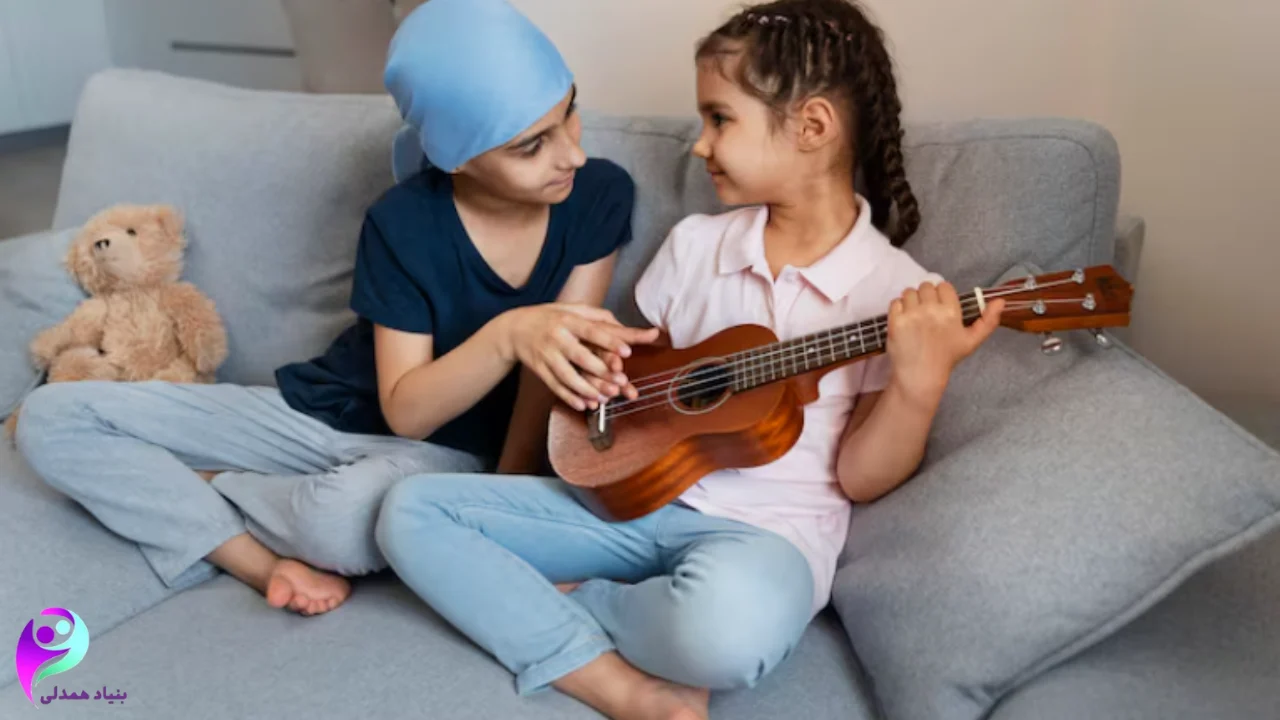
Children benefit more than adults from music therapy because music is a natural part of children’s lives. In many children’s hospitals, music therapy sessions are held with games, singing, and playing simple instruments. These sessions help the child:
- Reduce their fear of painful treatments such as injections or chemotherapy.
- Have more energy and vitality.
- Feel that they are not alone and that others are there for them.
Music Therapy for Seniors with Cancer
Seniors may be more vulnerable to cancer due to certain physical and psychological conditions. Music therapy in this group can:
- Reduce feelings of loneliness and isolation.
- Revive positive memories from the past.
- Help improve depression and anxiety.
- Improve sleep and rest.
Technology and Music Therapy
Technology advances have allowed patients to benefit from music therapy even at home. Some of the new tools and methods include:
- Music therapy apps that have designed specific programs for cancer patients.
- Headphones that reduce stress by playing nature music.
- Virtual reality with music that gives patients a relaxing and profound experience.
Combining Music Therapy with Other Complementary Therapies
Music therapy is more effective when used alongside other complementary therapies such as yoga, meditation, and art therapy. For example:
- Meditation with calm music helps calm the mind and increase concentration.
- Yoga exercises with gentle music increase flexibility in the body and mind.
- Art therapy and painting with music increase creativity and expression of emotions.
The Role of Music Therapists and Counselors
Professional music therapy requires trained professionals. These professionals design treatment programs based on the patient’s physical, mental, and musical interests. They can determine what type of music and how long to listen to it is most appropriate for each patient.
The Future of Music Therapy in Cancer Treatment
With the medical community becoming increasingly aware of the importance of mental health alongside physical therapy, music therapy is expected to become an integral part of cancer treatment. In many countries, hospitals have dedicated music therapy departments, and the results have been reported to be very positive. In the future, music therapy may be combined with artificial intelligence to provide personalized programs for each patient.
Overview
Music therapy is a simple, accessible, and non-invasive tool that can transform the lives of cancer patients. From reducing anxiety to increasing life expectancy, music has the ability to help patients through their most difficult moments. Families, caregivers, and doctors can make a big step toward improving their mood and quality of life by encouraging patients to use this method.
Conclusion
Music therapy is a simple but highly effective way to improve the mood of cancer patients. It can be a valuable companion to medical treatments by reducing stress, increasing life expectancy, reducing pain, and improving sleep quality. The use of music is relaxing not only for patients but also for families and creates a more positive atmosphere in the treatment process.
Frequently Asked Questions (FAQ)
1. Can music therapy cure cancer?
No, music therapy does not cure cancer, but it helps improve mood, reduce stress, and increase quality of life.
2. What kind of music is best for cancer patients?
Calm, gentle music that suits the patient’s personal taste is the best option.
3. Can children with cancer also use music therapy?
Yes, music therapy is very effective for children and helps reduce their fear and anxiety.
4. How often should music therapy be used?
It is better to do it daily or several times a week, even for a short period of time.
5. Does music therapy have side effects?
No, music therapy has no side effects and is suitable for all age groups.
Author of the article:Erfan

