
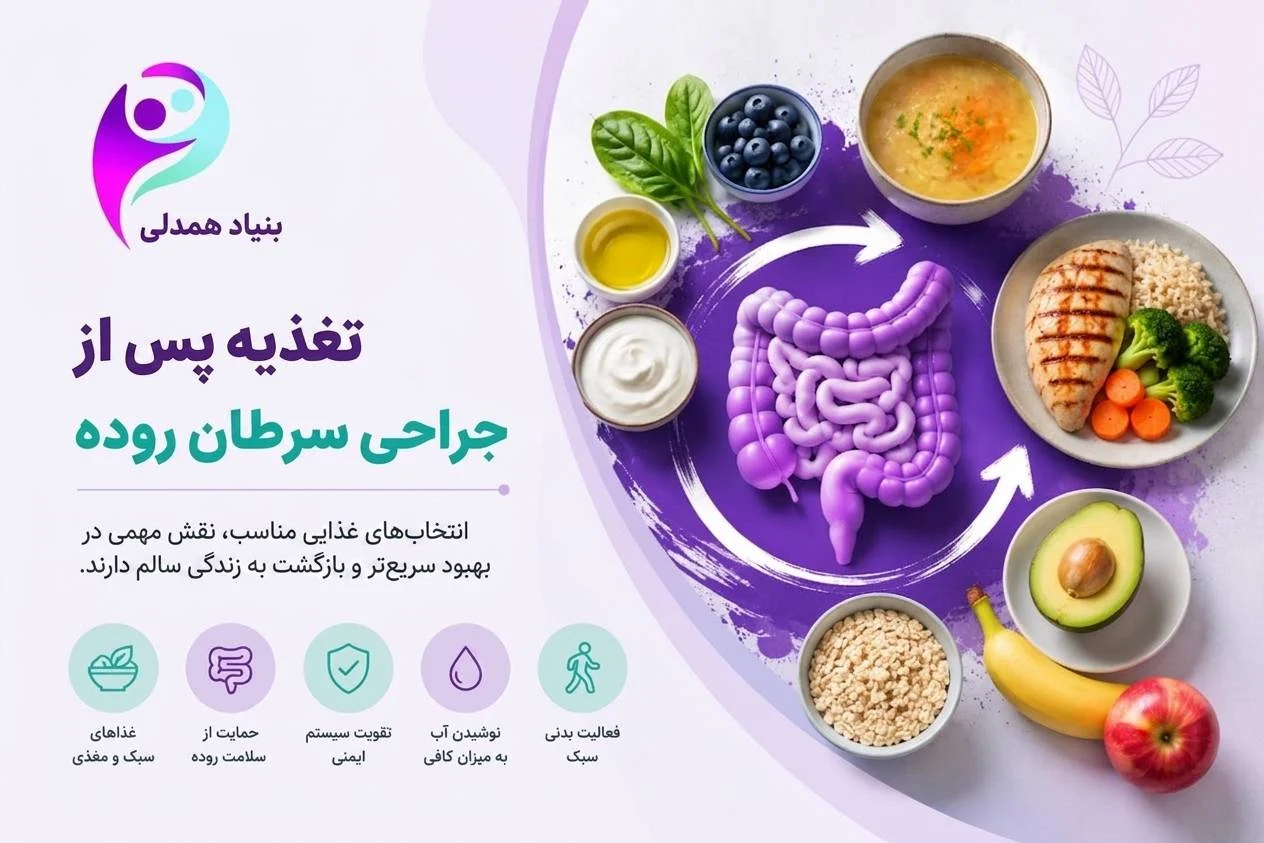
Nutrition after bowel cancer surgery: A comprehensive guide to regaining health and energy
Nutrition after bowel cancer surgery is one of the most important factors in the recovery of patients. After surgery, the body needs the right nutrients to repair tissues, fight infections, and restore energy. Following a proper diet not only speeds up the recovery process, but also helps prevent digestive complications and general weakness.
In this article, we will talk in detail about the diet of patients after bowel surgery, useful and harmful foods, nutrition timing, the role of proteins, fiber, vitamins, and fluids in the treatment process.
The Hamdali Foundation Charity is a support group in the field of helping cancer patients, which aims to reduce treatment concerns, cover essential expenses, and boost patients’ morale. This foundation, with public donations and the participation of donors, tries to make the treatment path smoother for patients and their families. If you are interested in supporting, you can do so through online payment, telephone contact, or online chat. Also, people who need help or advice can easily contact the foundation’s support team through these communication channels to receive the necessary guidance.
- The importance of nutrition after bowel cancer surgery
- Nutritional stages after bowel cancer surgery
- 1. Clear liquid stage
- Useful foods after bowel cancer surgery
- Taking supplements after surgery
- Proper nutrition to strengthen the immune system after surgery
- Anti-inflammatory diet after surgery
- Important tips for drinking fluids after surgery
- The Role of Nutritional Counseling During Recovery
- Conclusion
- Frequently Asked Questions about Nutrition after Colon Cancer Surgery
The importance of nutrition after bowel cancer surgery
After surgery, the body faces several challenges: blood loss, decreased energy, tissue inflammation, and altered digestive function. At this stage, proper nutrition can:
Speed up wound healing.
Strengthen the immune system.
Prevent infections.
Restore normal bowel function.
Reduce feelings of weakness, nausea, and constipation.
For this reason, doctors and nutritionists usually recommend a gradual diet tailored to the patient’s condition so that the digestive system can slowly rebuild.
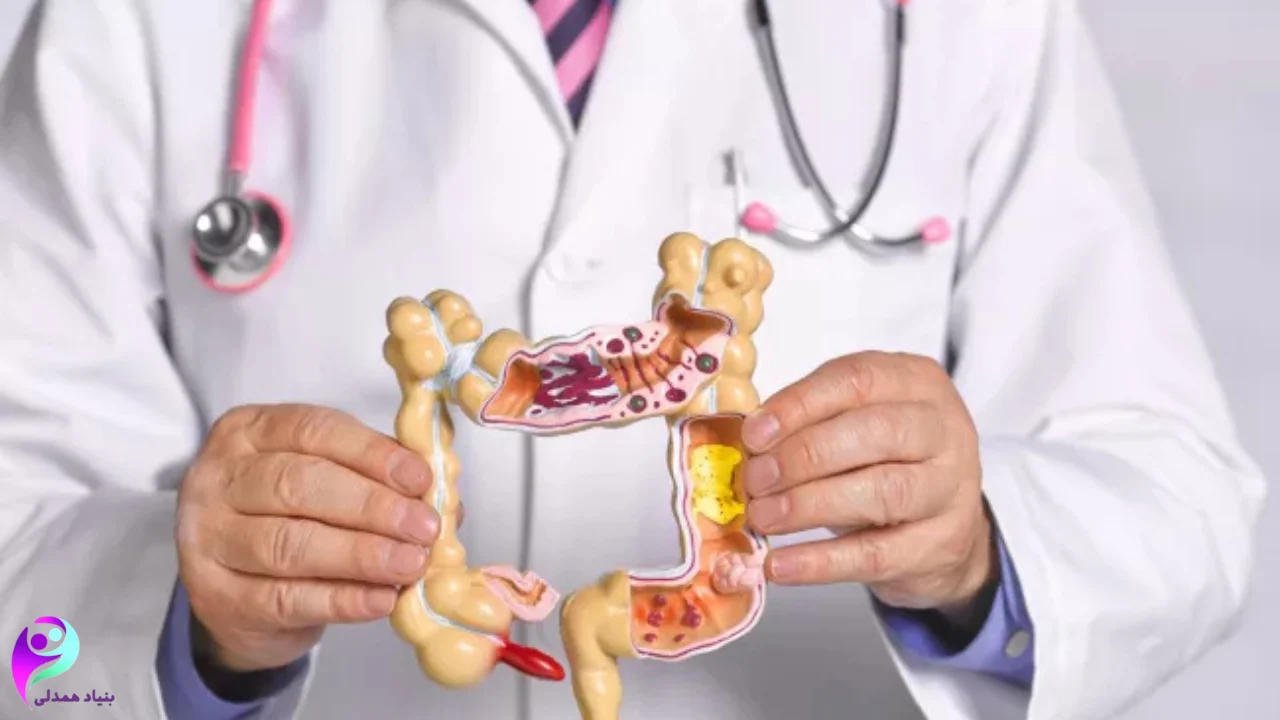
Nutritional stages after bowel cancer surgery
1. Clear liquid stage
In the first hours after surgery, the intestines are not yet fully functional. At this time, only clear liquids are allowed, such as:
Teaward-winning boiled water
Natural filtered apple juice
Pale tea
Fat-free filtered chicken broth
Jelly without sugar and additives
These liquids hydrate the body and gradually stimulate bowel function.
2. Full liquid stage
A few days later, when the patient is able to tolerate more foods, more complete liquids can be consumed, such as:
Soft vegetable soup
Low-fat milk or soy milk
Grain-free fruit smoothies
Porridge or almond paste
This stage usually lasts 3 to 5 days to prepare the digestive tract for solids.
3. Soft and pureed foods stage
At this stage, the patient can include soft, pureed, and low-fat foods in the program. Examples:
Bland rice or porridge
Mashed potatoes
Steamed and chopped chicken or fish
Soft-boiled eggs
Cooked vegetables such as carrots or pumpkin
These foods are easily digested and help the body gradually return to normal.
4. Gradual return to normal diet
After about two to three weeks, a more varied diet can be introduced with the doctor’s advice. However, heavy, fatty and spicy foods should still be avoided.
Useful foods after bowel cancer surgery
1. High-quality proteins
Protein is essential for tissue repair. Good sources include:
Chicken and turkey without the skin
Steamed white fish
Eggs
Cooked and mashed beans (in later stages)
Greek yogurt and low-fat cheese
2. Cooked fruits and vegetables
The soluble fiber in some fruits and vegetables facilitates bowel movements, but they should be eaten cooked and without the skin in the first weeks. Such as:
Cooked apples
Steamed carrots
Cooked zucchini
Ripe bananas
3. Light whole grains
Soft rice, oatmeal, and light whole grain breads help improve bowel function, but should not be eaten in the first few days after surgery.
4. Adequate fluids
Water, coconut water, diluted yogurt, and vegetable juices are vital for maintaining electrolyte balance and preventing constipation.
Harmful foods after bowel cancer surgery
To prevent digestive problems, the patient should avoid the following:
- Fried and fatty foods
- Spicy foods
- Cabbage, beans and peas (cause bloating)
- Soft drinks and coffee
- Heavy and creamy sweets
- Processed foods such as sausages and hot dogs
Fiber’s Role in Bowel Healing
In the first few weeks after surgery, consuming too much fiber can be irritating to the bowel. But after a while, soluble fiber (such as oatmeal and applesauce) can help regulate bowel movements and prevent constipation.
Taking supplements after surgery
In some patients, vitamin and mineral deficiencies occur due to reduced intestinal absorption. The following supplements can be prescribed after consulting a doctor:
- Vitamin D to strengthen immunity and bones
- Vitamin B12 if part of the intestine is removed
- Iron to compensate for anemia
- Zinc and magnesium for tissue repair
Golden tips for patients after intestinal surgery
Eat small, frequent meals.
Avoid eating quickly or in large quantities.
Drink fluids between meals, not with meals.
Chew foods well to make digestion easier.
Try each new food at intervals to see how your body reacts.
Eat soft, low-fiber foods if you have diarrhea.
Avoid carbonated drinks.
The Connection Between Nutrition and Gut Microbiome Restoration
After surgery, the balance of beneficial gut bacteria (the microbiome) can be disrupted. Consuming probiotic foods such as plain yogurt, kefir, and fermented vegetables (later in the series) can help restore this balance. These bacteria play an important role in nutrient absorption and immune health.
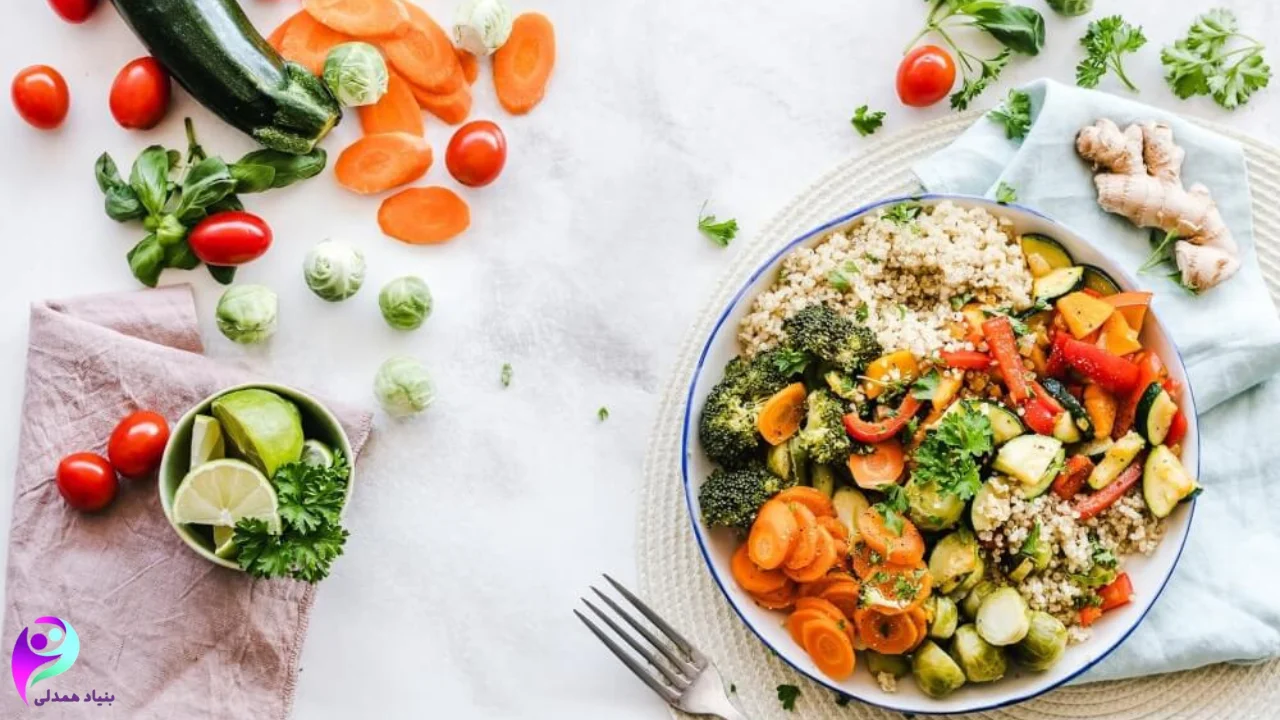
Proper nutrition to strengthen the immune system after surgery
After colon cancer surgery, one of the main goals of nutrition is to strengthen the immune system. The body is more vulnerable than ever at this stage, because it is facing the effects of surgery and may also undergo chemotherapy or radiation treatments. For this reason, consuming the following foods is particularly important:
1. Sources of vitamin C
Vitamin C plays a key role in repairing tissues and increasing the body’s defenses. It can be obtained from the following sources:
Oranges and grapefruit (if you tolerate acidity)
Cooked bell peppers
Soft kiwis
Natural lemon juice in small amounts
2. Sources of vitamin A
Vitamin A helps regenerate cells and strengthen the intestinal mucosa. Good sources include:
Cooked carrots
Sweet potatoes
Cooked spinach
Egg yolks
3. Antioxidant-Rich Foods
Antioxidants protect the body from oxidative stress caused by surgery and medications. Berries, mild green tea, and freshly cooked vegetables are recommended.
The Role of Probiotics and Prebiotics
In the postoperative period, the balance of beneficial intestinal bacteria is very sensitive. The use of probiotics (such as natural yogurt and kefir) helps to increase beneficial bacteria and reduce the risk of infection.
On the other hand, prebiotics, which are food for beneficial bacteria, are found in foods such as oatmeal, bananas and apples.
Of course, the consumption of these substances should be started gradually and if the patient experiences bloating or diarrhea, the amount of consumption should be reduced.
Anti-inflammatory diet after surgery
After surgery, the body is faced with inflammation in the intestinal tissue. Some foods can reduce inflammation and speed up the healing process. Anti-inflammatory foods include:
Fatty fish like salmon (in the later stages)
Extra virgin olive oil
Turmeric (in moderation)
Steamed vegetables and cooked fruits
In contrast, processed foods, excessive red meat, and white sugar should be avoided, as they exacerbate inflammation.
Important tips for drinking fluids after surgery
Dehydration can cause constipation, weakness, and reduced nutrient absorption. Patients should drink at least 8 to 10 glasses of fluid daily. Of course, fluids should be consumed between meals to avoid straining digestion.
Suitable fluids include:
- Warm water
- Thin, non-carbonated buttermilk
- Natural coconut water
- Soothing teas such as chamomile or mild ginger
Caffeinated, carbonated, and sweetened beverages should be avoided.
How to Manage Digestive Problems After Surgery
After bowel cancer surgery, many patients experience problems such as diarrhea, bloating, constipation, or excessive gas. Here are some practical tips to help manage these conditions:
- For diarrhea: Eat bland foods, such as rice, potatoes, yogurt, and bananas.
- For constipation: Drink plenty of water and eat cooked, fiber-rich vegetables.
- For bloating: Avoid legumes, carbonated drinks, and vegetables like cabbage.
- To reduce gas: Eat smaller portions and avoid drinking through a straw to avoid swallowing excess air.
The importance of nutritional care during subsequent treatments
Some patients require chemotherapy or radiation therapy after surgery. These treatments can reduce appetite or cause nausea. In this case, nutritional support is very important. Some useful tips:
- Eat small, frequent meals.
- Eat cool, light foods.
- Reduce strong odors in food (steamed foods are best).
- Natural juices and thin soups can replace heavy meals.
Gradual return to normal life
After a few weeks, when the wounds have healed and bowel function has returned to normal, the patient can gradually resume a normal but healthy diet.
It is best to:
- Increase your intake of healthy fats, such as olive oil.
- Avoid sugar and fast food.
- Increase fiber slowly in your diet.
- Continue to avoid alcohol, tobacco, and processed foods.
The Role of Nutritional Counseling During Recovery
After surgery, patients’ nutritional status varies greatly. Some may lose weight or have a loss of appetite. At this stage, consulting with a nutritionist can be crucial to design a personalized plan for each patient.
A proper plan can include the following:
- Adjusting daily calorie needs
- Determining the appropriate ratio of protein and fiber
- Choosing alternative foods in case of intolerance
- Planning for supplements and when to take them
Conclusion
Nutrition after bowel cancer surgery is one of the main pillars of the patient’s treatment and rehabilitation. The diet plan should be adjusted in consultation with the doctor and nutritionist so that it is both sufficient in terms of energy supply and does not put pressure on the intestines. Gradual consumption of food from liquids to solids, avoiding heavy foods, and drinking enough water will smooth the path to recovery.
A balanced diet with protein, vitamins, and controlled fiber can help the patient return to normal life faster and maintain their quality of life after surgery.
Frequently Asked Questions about Nutrition after Colon Cancer Surgery
1. When can you eat normal food again after colon cancer surgery?
After surgery, the doctor usually prescribes a clear liquid diet for a few days to give the digestive system time to recover. After bowel movements improve, soft and pureed foods can be gradually introduced into the diet. A full return to normal food may take between 4 and 6 weeks, of course, with the advice of the attending physician.
2. Do patients after colon cancer surgery need to have a special diet?
Yes. The diet after surgery should be rich in protein, soluble fiber, vitamins and minerals so that the body can recover faster. Fatty, fried and bloating foods should also be avoided for a while so that the intestines do not become irritated and regain their normal function.
3. Is dairy allowed after bowel surgery?
Some patients may develop lactose intolerance after surgery. Therefore, it is better to use lactose-free dairy products or probiotic yogurts at first. If there are no problems, you can gradually add other dairy products to your diet.
4. What foods are good for faster bowel repair?
High-protein foods such as chicken, steamed fish, egg whites and lentils help rebuild damaged tissues. Steamed vegetables, mashed potatoes, soft brown rice and light soups are also excellent options to strengthen the digestive system and heal wounds.
5. Can patients eat fruit after bowel cancer surgery?
Yes, but fruits with soluble fiber and a softer texture should be chosen, such as bananas, baked apples, peaches or pears without the skin. It is better to avoid acidic or thick-skinned fruits such as oranges and grapes for a while to avoid irritating the bowel.
6. How effective is drinking water in post-operative recovery?
Drinking enough water is very vital. Dehydration can slow bowel movements and cause constipation, while the body needs plenty of fluids to rebuild and flush out toxins after surgery. It is recommended that patients drink about 8 to 10 glasses of water per day, unless a doctor has set a limit.
7. Should patients take supplements?
In some cases, after surgery, the body has difficulty absorbing certain vitamins and minerals, especially vitamin B12, iron, and vitamin D. Your doctor may recommend taking prescription supplements to help make up for deficiencies and boost your immune system.
Author of the article:Erfan

