
- Empathy with children with cancer; where a kind look is more powerful than a thousand treatments
- Why is empathy so important for children with cancer?
- What do children with cancer want from us?
- How can we empathize with children with cancer? (Real and practical ways)
- The role of the family in empathizing with a child with cancer
- What activities boost a child’s morale?
- The role of volunteers in creating empathy with children with cancer
- How can we prepare the hospital environment for better empathy?
- The impact of empathy on the treatment process
- Mistakes We Shouldn’t Make
- How do charitable foundations play a role in empathy?
- How can we reduce a child’s fear of treatment?
- Play therapy: a simple but incredibly useful tool
- How to empathize with older children (10 to 15 years old)?
- How can we make hospital moments feel like home?
- How can we be there for our siblings?
- The Role of Schools and Teachers in Empathy
- Why does empathy need to be taught?
- Is empathy only for difficult moments?
- How can media and social media play a role in empathy?
- Conclusion: How does empathy happen?
- Frequently Asked Questions About Empathy with Children with Cancer
Empathy with children with cancer; where a kind look is more powerful than a thousand treatments
Imagine walking through a pediatric ward of a hospital. Rooms with colorful walls, small beds, patterned pillows… But the atmosphere of the room is not defined by these alone. The look of a five- or six-year-old child who has undergone chemotherapy and lost his hair shakes the world as much as his shy smile when someone sits next to him. The point is this: empathy for children with cancer is not just financial assistance; it is a “human presence” that calms their hearts.
In this text, we want to explain precisely and simply what empathy means, how to do it, what needs families have, how volunteers can help, and what behaviors make a child who is experiencing difficult days feel more secure and hopeful.
The Hamdali Foundation Charity is a support group in the field of helping cancer patients, which aims to reduce treatment concerns, cover essential expenses, and boost the spirits of patients. The foundation works with public donations and the participation of donors to make the treatment path easier for patients and their families. If you are interested in supporting us, you can do so through online payment, telephone contact, or online chat. Also, people who need help or advice can simply contact the foundation’s support team through these communication channels to receive the necessary guidance.
Why is empathy so important for children with cancer?
Let me put it simply: Cancer is not a “strange word” for a child, it is an experience. Something that wears out their body and disrupts their life plan. A child who should spend his days between school, play and discovering the world, suddenly faces needles, serum, the smell of alcohol, a cold hospital room and the worried gaze of his parents.
This is where empathy comes into play.
Empathy means:
- Seeing the child beyond the illness
- Understanding their fears and questions
- Reducing their anxiety with a small gesture
- Listening, not just sympathizing
- Creating moments that keep them a “child”; not a “patient”
A real-life example:
A child who has been away from school for a long time due to treatment. When a volunteer brings him a sketchbook and sits with him for half an hour, that child completely disconnects from the treatment space for that half hour. It’s a big deal for him. For us, it might be a small thing.
What do children with cancer want from us?
If we were to list it, it might seem strange:
No expensive expenses, no medical equipment…
Most of them want things that are simple and done with the heart:
1. A sense of security
When a child is in pain, the first thing he needs is “reassurance”. To know that someone is there and will not abandon him.
2. Being heard
Sometimes a child doesn’t know how to describe his fear. But when someone sits patiently next to him, his broken words turn into a conversation.
3. Moments without being sick
Drawing, playing, stories, a small toy… All of these help the child not to forget that he is still the same naughty and curious child he was before.
4. Kind honesty
You should neither lie to the child, nor should you shock him with the truth. The best thing to do is to explain it in his own words and gently.
5. Avoid Pity
Children don’t like the “compassion from above.” They need respect; respect for their personality, abilities, and spirit.
How can we empathize with children with cancer? (Real and practical ways)
Here are some simple, practical, and effective methods that have proven effective in charities and hospitals.
1. Emotional support
It doesn’t mean spending hours a day with your child. Even five minutes of your time can make a difference.
A simple sentence like, “Do you want me to tell you a story?” or “Would you like to draw something?” works wonders.
2. Speaking in your child’s language
We don’t have to change the word “cancer” or hide it, but we should speak in a language that the child understands and isn’t afraid of.
For example, when he asks, “Why is my hair falling out?” it’s better to say:
“The medicine you’re taking is very strong because it’s trying to get those bad things out of your body. Sometimes the hair gets irritated and doesn’t come back for a while. It comes back again.”
3. Creating happy moments
A coloring book, a simple balloon, a small toy… you might think it’s not a big deal, but for a child who has been in the hospital for weeks, it’s like a short trip to the world of freedom.
4. Teaching without being strict
Children are away from school during treatment. Some volunteers give them small classes; very simple and without pressure.
This helps the child feel like they are still part of “normal life.”
5. Respecting the child’s boundaries
Sometimes the child is tired. Sometimes they don’t want to talk.
Empathy means that we don’t rub salt in the wound and force them. A quiet presence is always better than a loud presence.
The role of the family in empathizing with a child with cancer
Now let’s get to the hardest part: the parents.
No one feels the depth of worry, insomnia, psychological pressure, and false guilt like parents. Many people spend their nights blaming themselves for things like, “Maybe I realized it too late, maybe I should have been more careful, maybe…”
In such a situation, the first step is to provide psychological support to the family as well.
To empathize with the child, the family must:
- Maintain relative calm (as much as possible)
- Get accurate information from doctors
- Be honest with the child
- Don’t make the space too hospital-like
- Draw a line between “care” and “restricting life”
For example, some parents don’t allow their child to do even the smallest activity out of fear of infection. While the child needs to play and move around, the best way is to control activities, not eliminate them.
What activities boost a child’s morale?
These are things that have been proven to work in the experience of child psychologists and charitable foundations:
1. Short but continuous conversations
No lectures, no advice.
A simple conversation about interests, drawings, games.
2. Art activity
Drawing, Lego, play dough, puzzles…
These are very useful for releasing emotions.
3. Recording good moments
A small album of photos or drawings of the child reminds him that, in addition to treatment, he also had good things.
4. Encouraging real courage, not force
Courage means that the child knows that he is afraid, but continues anyway.
We don’t have to say “don’t be afraid.”
It’s better to say “I know you are afraid, but you are so strong that you are trying again despite your fear.”
The role of volunteers in creating empathy with children with cancer
If you are a volunteer or intend to help, this section is for you.
The candidate must:
- Give the child short but quality time
- Create a happy and respectful atmosphere
- Be non-judgmental
- Be careful not to say things that unintentionally hurt the child
- Ask the family what the child likes and dislikes
One important thing:
The volunteer is not going to take the place of the family.
He is just a kind companion who makes heavy burdens a little lighter.
How can we prepare the hospital environment for better empathy?
A few small changes will make the space much more humane:
- Colorful and cheerful walls
- Small toys in the playroom
- Children’s library
- Comfortable chairs for parents
- Appropriate lighting and soft music
These are not medical treatments, but psychologically, they enhance the child’s quality of life.
The impact of empathy on the treatment process
All pediatricians agree on one thing:
A good mood makes it easier for a child to cooperate with treatment.
When a child is calmer:
- Eats better
- Resists less
- Develops greater trust in doctors
- Reduces anxiety
- Feels less pain
Cancer treatment is complicated, but “mood” is one tool that always works and never has side effects.
Mistakes We Shouldn’t Make
Sometimes our intentions are good, but our behavior is wrong.
Here are a few things that really matter:
- Saying clichés like “Be strong!” or “It’s okay!”
- Comparing the child to another child
- Insulting or giving unnecessary warnings
- Asking sensitive questions in front of the child
- Exaggerated sympathy
- Making the child happy
The child has the right to be tired, to cry, to be upset.
We just need to be there for them, that’s all.
How do charitable foundations play a role in empathy?
Charities usually have three main roles:
- Financial support for families
- Educational programs for children
- Psychological, educational, and counseling support
Charities like the Empathy Foundation work on exactly these three axes:
From covering the heavy costs of treatment to providing a safe environment for children to play, study, and be happy.
How can we reduce a child’s fear of treatment?
If you’ve ever been around a child who’s about to have their first chemotherapy treatment, you’ve probably seen the fear in their eyes. The cold room, the noise of the machines, and the fact that the other kids look a little tired can be enough to make them feel a little overwhelmed. But a few small things can go a long way in alleviating that fear.
For example, some parents give their child a “mini-task” for each treatment session; something like, “Today we’re going to draw a new picture and then we’re going to choose a name for it.” This helps keep their mind off of the treatment.
Or you can explain what’s going to happen in a calm voice before the treatment begins. Children are less afraid when they know what’s going to happen. A simple statement like, “They’re going to stick a little needle in, it’ll last a couple of seconds, then it’ll be fine” can help.
Play therapy: a simple but incredibly useful tool
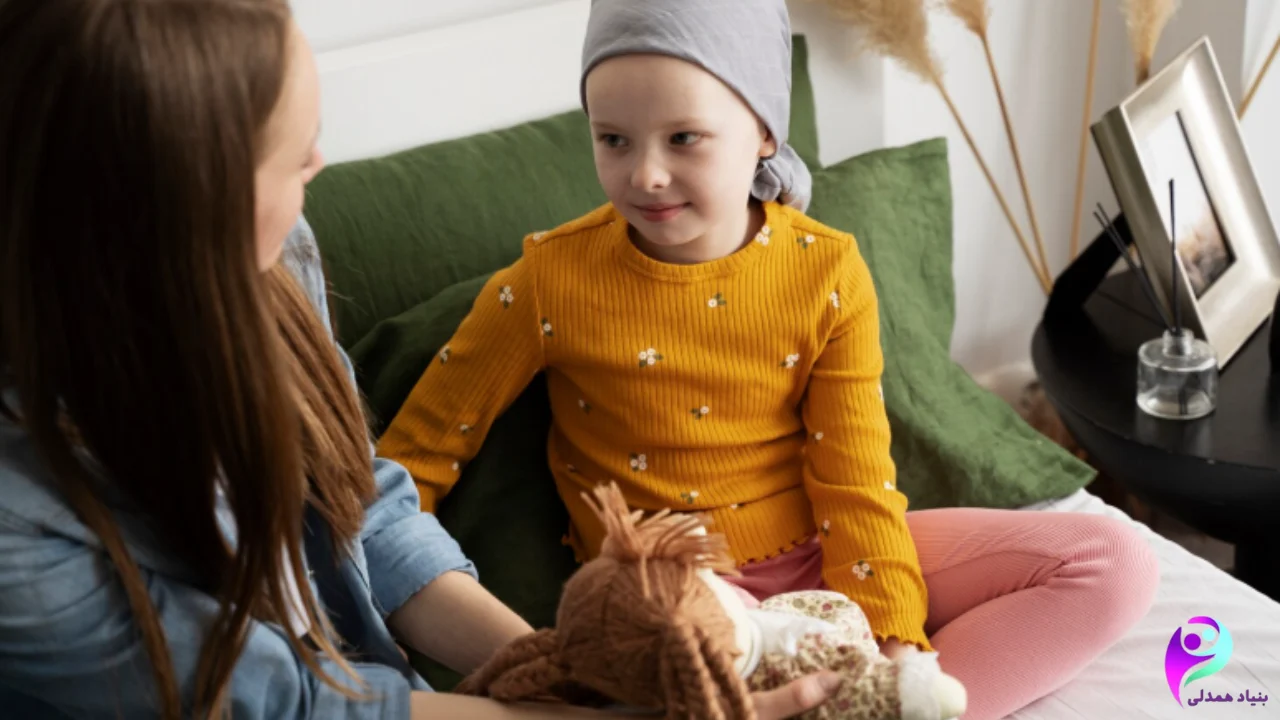
Children release their emotions through play, especially during illness. For example, a child will do with their doll what the nurse did with them. This means they are processing their experience.
Charities often have small rooms dedicated to play therapy. In these rooms, children can:
- Paint
- Build Legos
- Doctor dolls
- Make up stories
And even make masks (something they love!)
Psychologically, these types of games have a profound effect on reducing anxiety. When a child can take “control” in play, the world feels more predictable.
How to empathize with older children (10 to 15 years old)?
Many people think that only small children are afraid of illness, but teenagers are the most sensitive of all. Because their bodies are changing, their minds are seeking independence, and the illness suddenly takes everything away from them.
For this group:
- Privacy should be taken very seriously
- You should speak to them respectfully
- You should involve them in everyday decisions
- You should avoid direct and heavy questions
A simple example:
Instead of saying, “Why are you bored today?”, it is better to ask: “What would you like me to do to make you feel better today? Music? Talking? Silence? Or a game?”
Teenagers react strangely to respect. Once they feel “heard,” the treatment process becomes more bearable for them.
How can we make hospital moments feel like home?
No matter how cheerful a hospital is, it’s still a hospital. But a few small things can make the space more bearable:
- Bringing your child’s favorite blanket
- Posting some family photos on the wall next to the bed
- Bringing a doll or toy that they always have with them
- Bringing a small nightlight
- Even playing soft music
These simple things can take your child out of the “migration into a scary world” mode and into a familiar space.
How can we be there for our siblings?
A very important and often forgotten aspect: the siblings of the sick child. They are both afraid, feel lonely, and think they will never be seen again.
In order to maintain or even improve the sibling relationship, it is necessary to do the following:
- Explain the illness simply without scaring
- Give them a small role (for example, make a craft and give it to the patient)
- Create time for two with the parents
- Encourage them to express their feelings
If the sibling relationship remains strong, the sick child also feels more supported.
The Role of Schools and Teachers in Empathy
A child undergoing chemotherapy is often away from school for months or even years. This time away can have a huge impact on their morale, as they feel “left behind.”
This is where schools can help:
- Teachers should sometimes send a voice or video message to the child
- Send light and interesting assignments, not intensive ones
- His friends should send him a drawing or letter
- After the child returns, help him without judging or comparing
Even a few-second message from his close friend can keep the child hopeful for a week.
Why does empathy need to be taught?
The truth is that most of us have good intentions, but we don’t know how to empathize properly. For example, we unconsciously say things that may be hard on a child. Or we think we have to keep them happy all the time.
That’s why charities and hospitals often offer short courses on:
- How to talk to children
- How to deal with crying and tiredness
- How to answer difficult questions
- Avoiding creating fear or false hope
Experience has shown that when volunteers are trained, children become calmer, more sociable, and more cheerful.
Is empathy only for difficult moments?
No. In fact, empathy is also needed in good moments. When a child is energetic and laughing, many people think, “Well, now that he is feeling good, he doesn’t need empathy.” But the truth is that even high-energy moments need companionship.
For example, when a child is feeling better today after a difficult week, it is the best opportunity to play, teach, talk about hope and the future. These moments are like a reserve of energy for the days when things get tough again.
How can media and social media play a role in empathy?
Many people, being far removed from the world of children with cancer, have no idea what effective help is. This is where media, pages, and charity sites play an important role.
Good strategies:
- Introducing real, human stories
- Introducing real needs, not exaggerated ones
- Creating short-term campaigns
- Publishing educational videos for parents
- Introducing simple ways to help your child
Humane media teaches people that “empathy is not just about financial aid.”
Conclusion: How does empathy happen?
If we were to summarize the entire text in a few sentences:
- Empathy means seeing the child, not seeing their illness.
- It means sitting next to them, not above them.
- It means respect, kindness, listening, and creating small happy moments.
- Empathy with children with cancer is not a luxury; it is a real need.
- Anyone, even with a simple behavior, can contribute to this path.
If you’re thinking of helping, you don’t have to start big.
A crayon, a storybook, a short conversation, or even a message to family…
These are the beginnings of building hope.
Frequently Asked Questions About Empathy with Children with Cancer
1. What does empathy with children with cancer mean?
Empathy means seeing the child beyond their illness, listening to their concerns, creating quiet moments, and being there in a respectful and kind way. This both calms the child’s mind and makes the treatment process more bearable.
2. How can I provide emotional support to a child with cancer?
By being present, listening, playing, having simple conversations, bringing favorite items, and creating small happy moments. You don’t have to do big things; small but consistent things have the greatest impact.
3. What is the best sentence to encourage a child with cancer?
A sincere, calm, and non-pressured sentence. For example: “I know it’s hard, but I’m here and you’re not alone.” It’s best to avoid clichés like “don’t be afraid” or “be strong.”
4. Do the sick child’s siblings also need support?
Yes, actually a lot. They usually feel lonely and scared. They need to be explained, given a small role to help the child, and have dedicated time with the parents.
5. What is the role of charities in empathy?
Charities provide a safe environment for play, education, counseling, emotional support, and even financial assistance. These things both reduce the pressure on the family and improve the child’s quality of life.
6. Does empathy affect the cancer treatment process?
Yes, research has shown that empathy reduces anxiety, improves the child’s cooperation with treatment, increases appetite, and reduces the feeling of pain. A calm mind helps the body to resist better.
Article author:Erfan

